Birdr

Grimpereau des bois vs Grimpereau des jardins

Certhia familiaris contre Certhia brachydactyla

Faire un quiz avec Grimpereau des bois et Grimpereau des jardins

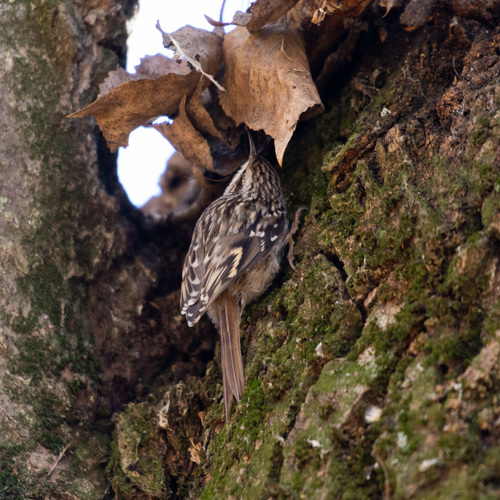
Grimpereau des bois (Certhia familiaris) Grimpereau des bois
Grimpereau des jardins (Certhia brachydactyla) Grimpereau des jardins

Médias

Chargement…

Voir la comparaison communautaire

En bref

La forme du bec est le critère de terrain le plus fiable : le Grimpereau des jardins a un bec légèrement plus long et plus recourbé par rapport au Grimpereau des bois. Les deux espèces sont similaires en plumage et en comportement, rendant les différences structurelles cruciales pour l'identification.

Conseils d’identification

  1. Vérifiez le bec : Le bec du Grimpereau des jardins est plus long et plus recourbé. 2. Observez la structure générale : Concentrez-vous sur la forme du bec car le plumage n'est pas un critère de distinction fiable.

Plumage

Les deux espèces ont un plumage brun et blanc similaire, rendant la couleur un critère de distinction peu fiable.

Modifier cette description

Utilise les mêmes sections que la comparaison. Ton texte est publié tout de suite.

The Eurasian Treecreeper and Short-toed Treecreeper are very similar, but can be distinguished by subtle differences in bill shape and vocalizations. The Eurasian Treecreeper typically has a slightly shorter, more decurved bill compared to the straighter bill of the Short-toed Treecreeper. Vocalizations also differ, with the Eurasian Treecreeper having a more varied song.

  1. Wing pattern. The light spot on the primaries in Short-toed has a straight line, while on Eurasian is recurves to the edge of the wing, forming a little 'cup' for the black bar closer to the wing  base.
  2. Supercilium. Eurasian has on average a lighter supercilium, that is connected to the bill. There is how ever a lot of overlap and regional variation.
  3. Bill Shape: Look for the slightly shorter, more decurved bill of the Eurasian Treecreeper. 
  4. Vocalizations: Listen for the more varied song of the Eurasian Treecreeper.
  5. Habitat: Note the type of forest; coniferous for Eurasian, deciduous for Short-toed. 

Both species are similar in size, with no significant differences observable in the field.

Plumage is very similar between the two, with both having streaked brown upperparts and white underparts. The supercilium is also similar, making plumage a less reliable distinguishing feature.

Both species exhibit similar foraging behavior, creeping up tree trunks and branches in search of insects.

Both species can be found in woodlands, but the Short-toed Treecreeper is more likely to be found in deciduous forests, while the Eurasian Treecreeper is often found in coniferous forests.

The Eurasian Treecreeper's song is more varied and complex, while the Short-toed Treecreeper's song is simpler and more repetitive. Calls are similar, but careful listening can reveal these differences.

Abandonner tes modifications ?

Tu as des modifications non enregistrées. Si tu pars maintenant, elles seront perdues.

Grimpereau des bois · Grimpereau des jardins · Mes oiseaux difficiles