Birdr

Rampichino alpestre vs Rampichino comune

Certhia familiaris contro Certhia brachydactyla

Fai un quiz con Rampichino alpestre e Rampichino comune

Rampichino alpestre (Certhia familiaris) Rampichino alpestre
Rampichino comune (Certhia brachydactyla) Rampichino comune

Media

Caricamento…

Mostra il confronto della community

In breve

La forma del becco è il segno distintivo più affidabile: il Rampichino comune ha un becco leggermente più lungo e più ricurvo rispetto al Rampichino alpestre. Entrambe le specie sono simili nel piumaggio e nel comportamento, rendendo le differenze strutturali cruciali per l'identificazione.

Consigli di identificazione

  1. Controlla il becco: Il becco del Rampichino comune è più lungo e più ricurvo. 2. Osserva la struttura generale: Concentrati sulla forma del becco poiché il piumaggio non è un differenziatore affidabile.

Piumaggio

Entrambe le specie hanno un piumaggio marrone e bianco simile, rendendo il colore una caratteristica distintiva poco affidabile.

Modifica questa descrizione

Usa le stesse sezioni del confronto. Il testo viene pubblicato subito.

The Eurasian Treecreeper and Short-toed Treecreeper are very similar, but can be distinguished by subtle differences in bill shape and vocalizations. The Eurasian Treecreeper typically has a slightly shorter, more decurved bill compared to the straighter bill of the Short-toed Treecreeper. Vocalizations also differ, with the Eurasian Treecreeper having a more varied song.

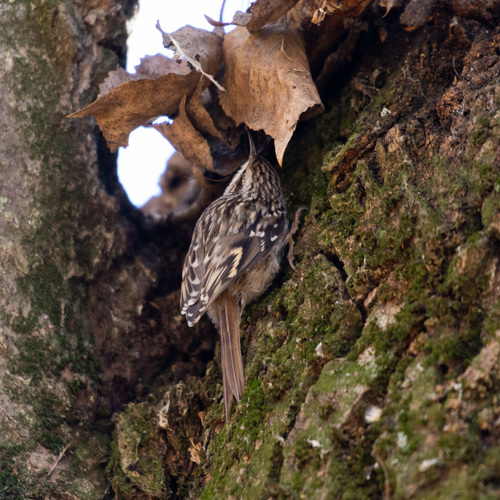
  1. Wing pattern. The light spot on the primaries in Short-toed has a straight line, while on Eurasian is recurves to the edge of the wing, forming a little 'cup' for the black bar closer to the wing  base.
  2. Supercilium. Eurasian has on average a lighter supercilium, that is connected to the bill. There is how ever a lot of overlap and regional variation.
  3. Bill Shape: Look for the slightly shorter, more decurved bill of the Eurasian Treecreeper. 
  4. Vocalizations: Listen for the more varied song of the Eurasian Treecreeper.
  5. Habitat: Note the type of forest; coniferous for Eurasian, deciduous for Short-toed. 

Both species are similar in size, with no significant differences observable in the field.

Plumage is very similar between the two, with both having streaked brown upperparts and white underparts. The supercilium is also similar, making plumage a less reliable distinguishing feature.

Both species exhibit similar foraging behavior, creeping up tree trunks and branches in search of insects.

Both species can be found in woodlands, but the Short-toed Treecreeper is more likely to be found in deciduous forests, while the Eurasian Treecreeper is often found in coniferous forests.

The Eurasian Treecreeper's song is more varied and complex, while the Short-toed Treecreeper's song is simpler and more repetitive. Calls are similar, but careful listening can reveal these differences.

Scartare le modifiche?

Hai modifiche non salvate. Se esci ora, andranno perse.

Rampichino alpestre · Rampichino comune · I miei uccelli difficili