
Bountyscharbe vs Warzenscharbe
Leucocarbo ranfurlyi gegen Leucocarbo carunculatus
Ein Quiz mit Bountyscharbe und Warzenscharbe spielen
 Bountyscharbe
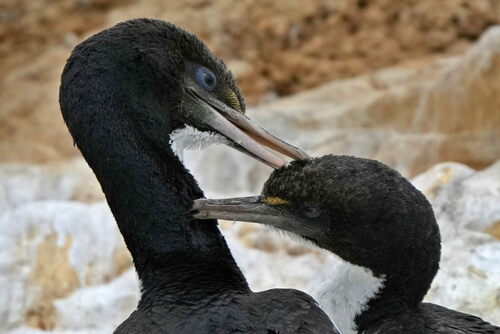 Warzenscharbe
Kurz gesagt
Die Bountyscharbe und die Warzenscharbe sind beide große, schwarz-weiße Scharben, die endemisch in Neuseeland sind, aber sie können durch ihre Verbreitung und subtile Unterschiede im Gefieder unterschieden werden. Die Bountyscharbe kommt ausschließlich auf den Bounty-Inseln vor, während die Warzenscharbe auf die Marlborough Sounds beschränkt ist.
Bestimmungstipps
- Standort: Überprüfen Sie den Standort des Vogels; die Bountyscharbe findet man auf den Bounty-Inseln, während die Warzenscharbe in den Marlborough Sounds vorkommt.
- Gesichtsmerkmale: Achten Sie auf Gesichtswarzen, die bei der Warzenscharbe ausgeprägter sein können.
Gefieder
Beide Arten haben ein ähnliches schwarz-weißes Gefieder, aber die Warzenscharbe kann ausgeprägtere Gesichtswarzen haben.
Lebensraum
Die Bountyscharbe kommt nur auf den abgelegenen Bounty-Inseln vor, während die Warzenscharbe auf die Marlborough Sounds beschränkt ist.