
Schwalbenorganist vs Dickschnabelorganist
Euphonia hirundinacea gegen Euphonia laniirostris
Ein Quiz mit Schwalbenorganist und Dickschnabelorganist spielen
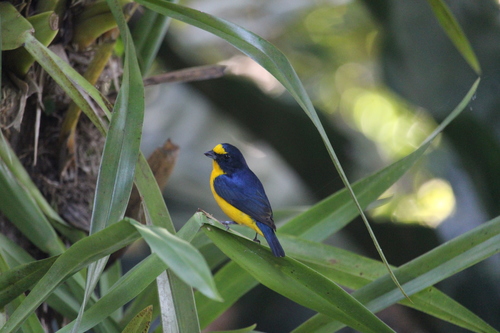 Schwalbenorganist
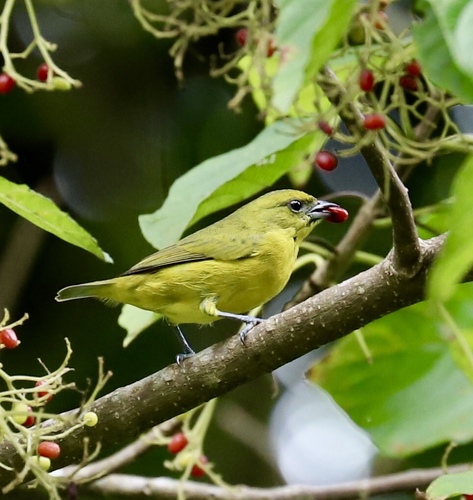 Dickschnabelorganist
Kurz gesagt
Die Schnabelform ist das zuverlässigste Erkennungsmerkmal: der Dickschnabelorganist hat einen deutlich dickeren Schnabel im Vergleich zum Schwalbenorganist. Beide Arten haben leuchtend gelbe Unterseiten, aber der Schwalbenorganist hat einen umfangreicheren gelben Hals, während das Männchen des Dickschnabelorganisten glänzend stahlblau mit einem gelben Scheitelpatch ist.
Bestimmungstipps
- Schnabelform: Achten Sie auf den dickeren Schnabel des Dickschnabelorganisten.
- Männchengefieder: Beachten Sie das glänzend stahlblaue und gelbe Scheitel des Männchens des Dickschnabelorganisten.
- Halsfarbe: Der Schwalbenorganist hat einen umfangreicheren gelben Hals.
- Lebensraum: Berücksichtigen Sie den Lebensraum, da Dickschnabelorganisten oft in niedrigeren Höhenlagen in Sekundärwuchs vorkommen.
Gefieder
Der Schwalbenorganist hat einen umfangreicheren gelben Hals, während das Männchen des Dickschnabelorganisten glänzend stahlblau mit einem gelben Scheitelpatch ist, der direkt hinter dem Auge endet. Die Weibchen beider Arten sind oben oliv und unten gelb, was es schwieriger macht, sie nur anhand des Gefieders zu unterscheiden.
Lebensraum
Der Dickschnabelorganist wird typischerweise unter 1200 m in Sekundärwald, Waldrändern und Gärten gefunden, während der Schwalbenorganist von intakten Wäldern bis zu isolierten Bäumen in Weiden vorkommen kann.
Schwalbenorganist · Dickschnabelorganist · Meine schwierigen Vögel