
Churrín Negruzco vs Tangara Gorjigualda
Scytalopus latrans frente a Hemithraupis flavicollis
Juega un quiz con Churrín Negruzco y Tangara Gorjigualda
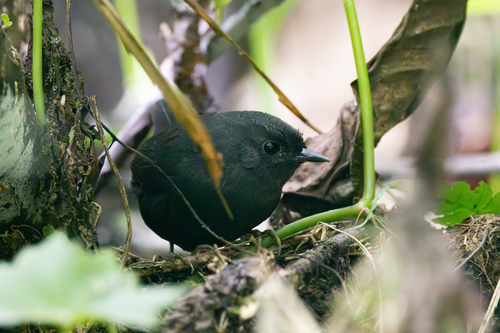 Churrín Negruzco
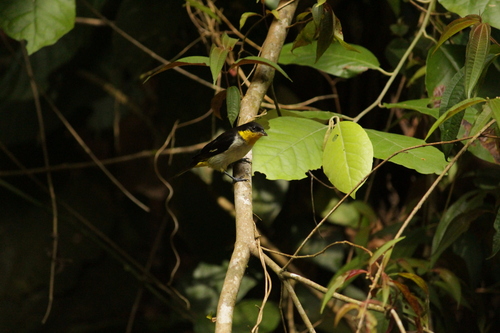 Tangara Gorjigualda
En breve
El Churrín Negruzco y la Tangara Gorjigualda difieren significativamente en hábitat y plumaje. El Tapaculo es un ave terrestre con plumaje oscuro, mientras que la Tangara es un habitante del dosel con una llamativa coloración amarilla y negra.
Consejos de identificación
1. Hábitat: Observa la ubicación del ave; los Tapaculos están cerca del suelo en cobertura densa, las Tangaras están en el dosel. 2. Plumaje: Busca el plumaje oscuro del Tapaculo a nivel del suelo frente al plumaje brillante amarillo y negro de la Tangara a nivel del dosel. 3. Comportamiento: Nota si el ave es solitaria o está en un grupo de especies mixtas.
Plumaje
Los machos de Churrín Negruzco son de color gris oscuro a negro, mientras que las hembras son más pálidas con flancos y rabadilla marrones. Los machos de Tangara Gorjigualda son negros por encima con una parte inferior amarilla, parche en la rabadilla y garganta, y partes inferiores de color blanco sucio. Las hembras son de color verde oliva por encima y amarillas por debajo.
Comportamiento
El Churrín Negruzco forrajea solitariamente o en parejas cerca del suelo, a menudo permaneciendo en cobertura densa. La Tangara Gorjigualda se observa frecuentemente en el dosel y a menudo se une a bandadas de especies mixtas.
Hábitat
El Churrín Negruzco se encuentra en elevaciones medias en cobertura densa en ambas laderas de los Andes. La Tangara Gorjigualda habita el dosel de bosques razonablemente altos.