Birdr

Cucal Monje vs Estornino Gorjinegro

Centropus monachus frente a Neocichla gutturalis

Juega un quiz con Cucal Monje y Estornino Gorjinegro

Cucal Monje (Centropus monachus) Cucal Monje
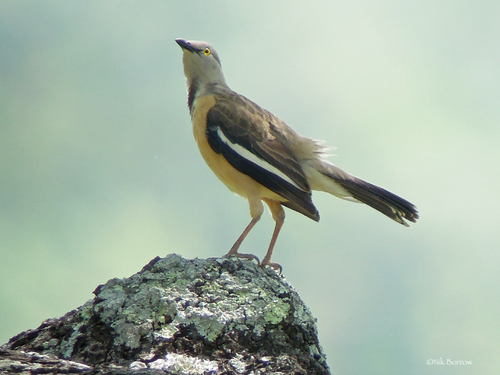
Estornino Gorjinegro (Neocichla gutturalis) Estornino Gorjinegro

Medios

Cargando…

En breve

El Cucal Monje y el Estornino Gorjinegro se pueden distinguir por su estructura y comportamiento. El cucal tiene un cuerpo más robusto con una cola más larga, mientras que el estornino es más esbelto y activo. Observar sus preferencias de hábitat y comportamientos puede ayudar en la identificación.

Consejos de identificación

1. Estructura: Busca el cuerpo robusto del cucal y su cola larga. 2. Comportamiento: Nota la naturaleza secreta del cucal frente al comportamiento activo y social del estornino. 3. Hábitat: Considera el hábitat: vegetación densa para el cucal, áreas abiertas para el estornino.

Tamaño

El Cucal Monje es generalmente más grande y robusto que el Estornino Gorjinegro.

Comportamiento

El Cucal Monje tiende a ser más secreto y menos activo, a menudo visto acechando en vegetación densa. En contraste, el Estornino Gorjinegro es más activo y social, a menudo visto en grupos.

Hábitat

El Cucal Monje se encuentra típicamente en hábitats densos y húmedos como pantanos y marismas, mientras que el Estornino Gorjinegro es más probable que se encuentre en bosques abiertos y sabanas.

Enviar una descripción mejor

Usa las mismas secciones que la comparación. El texto se publica al momento.

The Blue-headed Coucal and Babbling Starling can be distinguished by their structure and behavior. The coucal has a more robust body with a longer tail, while the starling is more slender and active. Observing their habitat preferences and behaviors can aid in identification.

1. Structure: Look for the coucal's robust body and long tail. 2. Behavior: Note the coucal's secretive nature versus the starling's active, social behavior. 3. Habitat: Consider the habitat—dense vegetation for the coucal, open areas for the starling.

The Blue-headed Coucal is generally larger and more robust than the Babbling Starling.

The Blue-headed Coucal tends to be more secretive and less active, often seen skulking in dense vegetation. In contrast, the Babbling Starling is more active and social, often seen in groups.

The Blue-headed Coucal is typically found in dense, wet habitats like swamps and marshes, while the Babbling Starling is more likely to be found in open woodlands and savannas.

¿Descartar los cambios?

Tienes ediciones sin guardar. Si sales ahora, se perderán.

Cucal Monje · Estornino Gorjinegro · Mis aves difíciles