
Vireo Solitario vs Trepador Cabecipardo
Vireo solitarius frente a Sitta pusilla
Juega un quiz con Vireo Solitario y Trepador Cabecipardo
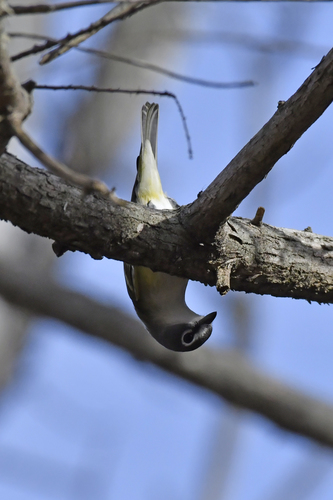 Vireo Solitario
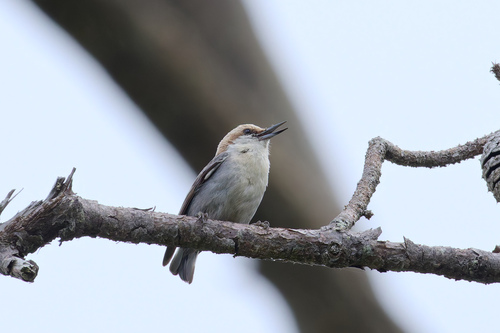 Trepador Cabecipardo
En breve
El Vireo Solitario y el Trepador Cabecipardo se pueden distinguir por sus preferencias de hábitat y la coloración de la cabeza. El vireo tiene una cabeza azul-gris distintiva con espectáculos blancos audaces, mientras que el trepador tiene una cabeza marrón y está estrechamente asociado con los bosques de pinos.
Consejos de identificación
- Color de la Cabeza: Busca la cabeza azul-gris con espectáculos blancos en el vireo frente a la cabeza marrón del trepador.
- Hábitat: Nota el hábitat; el vireo está en bosques mixtos, mientras que el trepador está en bosques de pinos.
- Comportamiento: Observa el comportamiento de forrajeo; el vireo se mueve lentamente entre las ramas, mientras que el trepador puede usar astillas de corteza como herramientas.
Plumaje
El Vireo Solitario tiene una cabeza azul-gris con espectáculos blancos audaces y una garganta y partes inferiores blancas contrastantes. En contraste, el Trepador Cabecipardo tiene una cabeza marrón y una apariencia más uniforme con un vientre pálido.
Comportamiento
El Vireo Solitario forrajea a media altura en los bosques, moviéndose lentamente entre las ramas, mientras que el Trepador Cabecipardo a menudo se queda alto en el dosel y utiliza herramientas como astillas de corteza de pino para forrajear.
Hábitat
El Vireo Solitario se encuentra en bosques de coníferas y caducifolios en todo Canadá y el este de los Estados Unidos, mientras que el Trepador Cabecipardo es endémico de los bosques de pinos del sureste de los Estados Unidos.