
Vireo Solitario vs Mascarita Coronigrís
Vireo solitarius frente a Geothlypis poliocephala
Juega un quiz con Vireo Solitario y Mascarita Coronigrís
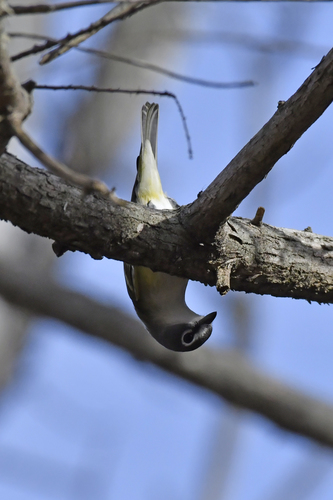 Vireo Solitario
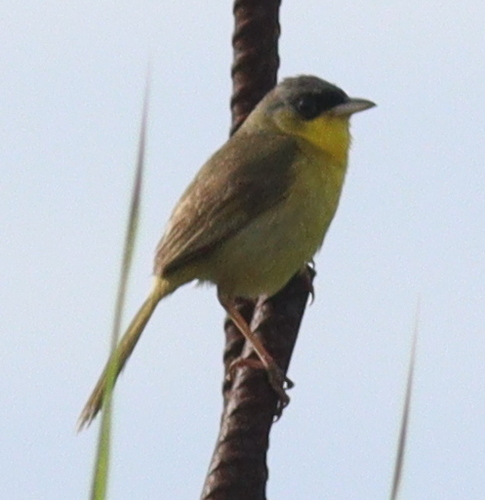 Mascarita Coronigrís
En breve
El Vireo Solitario y la Mascarita Coronigrís son distintos tanto en apariencia como en preferencia de hábitat. El Vireo Solitario se encuentra típicamente en bosques de coníferas y de hojas caducas en América del Norte, mientras que la Mascarita Coronigrís está más asociada con áreas abiertas y arbustivas en América Central. Las diferencias clave incluyen la distintiva cabeza azul-gris del Vireo Solitario y sus espectáculos blancos, en contraste con la corona gris y las partes inferiores amarillas de la Mascarita Coronigrís.
Consejos de identificación
Vireo Solitario: Busca una cabeza azul-gris con espectáculos blancos y escucha su hábito de forrajear a media altura en los bosques. Mascarita Coronigrís: Nota la corona gris y las brillantes partes inferiores amarillas, a menudo vistas en áreas abiertas y arbustivas.
Plumaje
El Vireo Solitario presenta una cabeza azul-gris con espectáculos blancos audaces y partes superiores verde oliva, mientras que la Mascarita Coronigrís tiene una corona gris y partes inferiores amarillas brillantes. El plumaje del vireo es más sutil e incluye una garganta y vientre blancos, en contraste con la coloración amarilla más vibrante de la mascarita.
Comportamiento
El Vireo Solitario forrajea principalmente a media altura en los bosques, moviéndose lentamente entre las ramas, mientras que la Mascarita Coronigrís es más probable que se vea en áreas abiertas, a menudo forrajeando más cerca del suelo.
Hábitat
El Vireo Solitario prefiere bosques maduros de coníferas y de hojas caducas, particularmente en Canadá y el este de los Estados Unidos, mientras que la Mascarita Coronigrís se encuentra en áreas abiertas y arbustivas, típicamente en América Central.