
Pijuí Cenizo vs Pijuí Pechiblanco
Synallaxis hypospodia frente a Synallaxis albescens
Juega un quiz con Pijuí Cenizo y Pijuí Pechiblanco
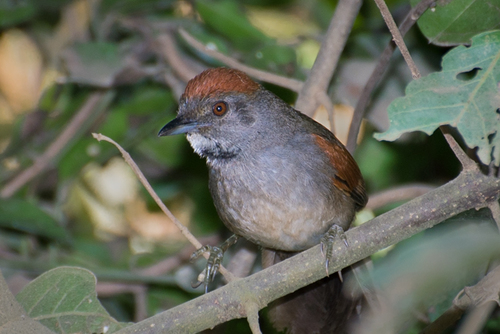 Pijuí Cenizo
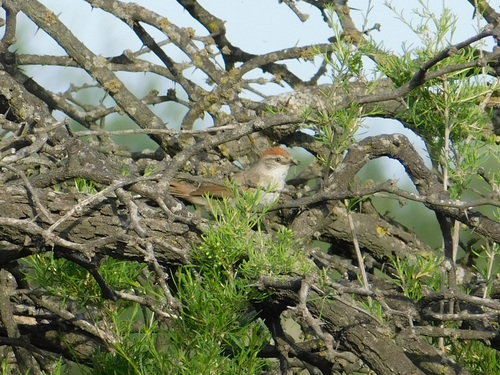 Pijuí Pechiblanco
En breve
El Pijuí Cenizo y el Pijuí Pechiblanco se pueden distinguir principalmente por su plumaje y preferencias de hábitat. El Pijuí Cenizo tiene una corona y alas rufo más pronunciadas con partes inferiores grises, mientras que el Pijuí Pechiblanco es generalmente más pálido por debajo con colas y alas marrones. Ambas especies se encuentran a menudo en hábitats abiertos, pero el Pijuí Cenizo prefiere pastizales y sabanas estacionalmente húmedos, mientras que el Pijuí Pechiblanco evita bosques cerrados.
Consejos de identificación
- Busca la corona y alas rufo en el Pijuí Cenizo.
- Nota las partes inferiores más pálidas y la cola marrón del Pijuí Pechiblanco.
- Escucha el llamado parloteante del Pijuí Cenizo.
- Observa el hábitat: el Pijuí Cenizo prefiere pastizales estacionalmente húmedos, mientras que el Pijuí Pechiblanco evita bosques cerrados.
Plumaje
El Pijuí Cenizo presenta una corona y alas rufo con partes inferiores mayormente grises y una mancha oscura en la garganta. En contraste, el Pijuí Pechiblanco es más pálido por debajo, con colas y alas marrones donde el rufo está mayormente confinado a las cobertoras.
Hábitat
El Pijuí Cenizo habita pastizales y sabanas estacionalmente húmedos, mientras que el Pijuí Pechiblanco se encuentra en áreas abiertas pero evita bosques cerrados.
Voz
El Pijuí Cenizo tiene un llamado parloteante distintivo y fuerte que acelera al final, descrito como 'muerde, muerde-chee-chee-chee-ee-ee-ee-ee-ee-eu'.