
Colirrojo Real vs Roquero Solitario
Phoenicurus phoenicurus frente a Monticola solitarius
Juega un quiz con Colirrojo Real y Roquero Solitario
 Colirrojo Real
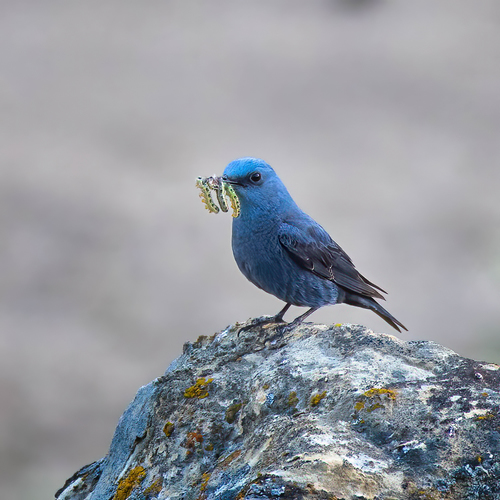 Roquero Solitario
En breve
El Colirrojo Real y el Roquero Solitario se pueden distinguir por su plumaje y preferencias de hábitat. El Colirrojo Real muestra típicamente una cola y partes inferiores de un brillante color naranja-rojo, mientras que el Roquero Solitario es más uniformemente azul o gris. También difieren en hábitat, con el Colirrojo favoreciendo los bosques y el Roquero prefiriendo áreas rocosas.
Consejos de identificación
Busca la cola naranja-roja del Colirrojo Real, especialmente cuando agita su cola. Nota el plumaje uniformemente azul o gris del Roquero Solitario. Considera el hábitat: bosques para los Colirrojos y áreas rocosas para los Roqueros.
Plumaje
El Colirrojo Real tiene una cola y partes inferiores distintivas de color naranja-rojo, contrastando con su parte superior gris y la máscara facial negra en los machos. El Roquero Solitario, en contraste, es más uniformemente azul o gris, con machos que a menudo muestran un azul más vibrante, especialmente en la cabeza y la espalda.
Hábitat
Los Colirrojos Reales se encuentran típicamente en bosques y bordes de bosques, mientras que los Roqueros Solitarios prefieren áreas rocosas, acantilados y regiones montañosas.