
Pardela Cenicienta vs Chingolo Pálido
Calonectris diomedea frente a Spizella pallida
Juega un quiz con Pardela Cenicienta y Chingolo Pálido
 Pardela Cenicienta
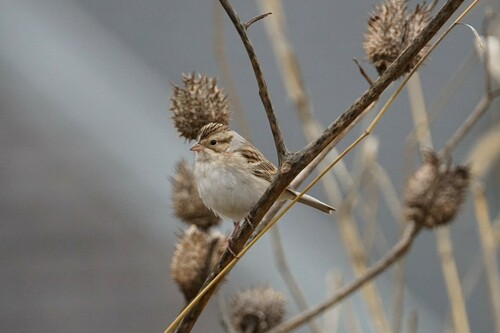 Chingolo Pálido
En breve
La Pardela Cenicienta y el Chingolo Pálido son muy diferentes en apariencia y hábitat, lo que hace poco probable que se confundan en el campo. La Pardela Cenicienta es un gran ave marina con alas largas, mientras que el Chingolo Pálido es un pequeño pájaro cantor terrestre.
Consejos de identificación
La ubicación es clave: la Pardela Cenicienta es marina, mientras que el Chingolo Pálido es terrestre. Las diferencias de tamaño y plumaje también son marcadas: busca la gran pardela de alas largas frente al pequeño chingolo estriado.
Tamaño
La Pardela Cenicienta es significativamente más grande que el Chingolo Pálido, con una envergadura que puede superar un metro, en comparación con el pequeño y compacto tamaño del chingolo.
Plumaje
La Pardela Cenicienta tiene un plumaje predominantemente gris y blanco con un distintivo ala inferior pálida, mientras que el Chingolo Pálido presenta un patrón más sutil de marrón y gris con una distintiva franja coronaria pálida y una cara amarillenta.
Comportamiento
La Pardela Cenicienta se ve a menudo planeando sobre las aguas del océano abierto, mientras que el Chingolo Pálido se encuentra típicamente saltando en el suelo o en vegetación baja.
Hábitat
La Pardela Cenicienta habita en ambientes marinos, a menudo lejos de la tierra, mientras que el Chingolo Pálido se encuentra en áreas abiertas y arbustivas, praderas y a veces en entornos suburbanos.