
Bubú Pechirrojo vs Tejedor de El Cabo
Laniarius atrococcineus frente a Ploceus capensis
Juega un quiz con Bubú Pechirrojo y Tejedor de El Cabo
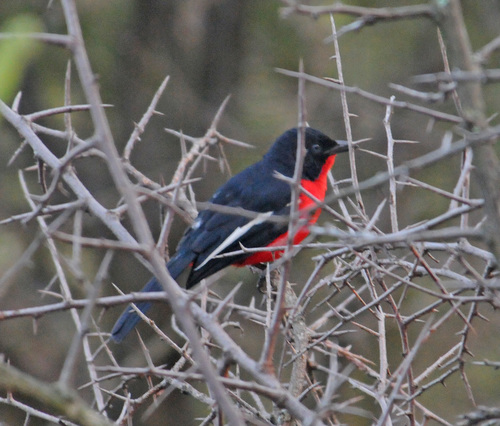 Bubú Pechirrojo
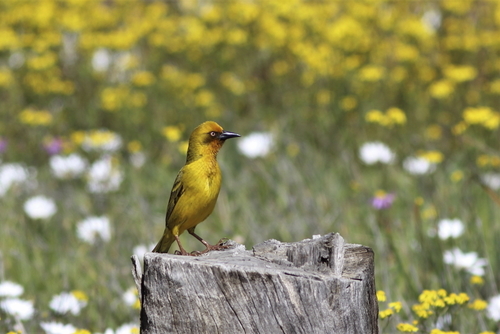 Tejedor de El Cabo
En breve
El Bubú Pechirrojo se distingue fácilmente por su llamativo pecho carmesí y su parte superior negra, mientras que el Tejedor de El Cabo es notable por su plumaje amarillo brillante con marrón anaranjado en la cara de los machos. Ambas especies difieren significativamente en color y preferencias de hábitat, lo que hace poco probable que se confundan en el campo.
Consejos de identificación
Busque el pecho carmesí y la parte superior negra para identificar al Bubú Pechirrojo. Para el Tejedor de El Cabo, observe el plumaje amarillo brillante con marrón anaranjado en la cara de los machos y la coloración oliva en las hembras. La preferencia de hábitat también puede ayudar en la identificación, con Tejedores de El Cabo encontrados en áreas abiertas con agua.
Plumaje
El Bubú Pechirrojo presenta un pecho carmesí vívido y una parte superior negra, contrastando marcadamente con el cuerpo amarillo brillante del Tejedor de El Cabo y las marcas faciales marrón anaranjado en los machos. Las hembras de Tejedor de El Cabo son olivas con una garganta y abdomen amarillos, diferenciándose de la coloración consistente del Bubú.
Comportamiento
Los Tejedores de El Cabo son sociales, a menudo se encuentran en grandes bandadas y dormideros, mientras que el comportamiento del Bubú Pechirrojo no se especifica aquí.
Hábitat
El Bubú Pechirrojo no se describe aquí, pero el Tejedor de El Cabo habita en campos abiertos con árboles y agua, evitando bosques y prefiriendo áreas montañosas en regiones más cálidas.