
Golondrina Cabecirrufa vs Bengalí Cebra
Cecropis cucullata frente a Amandava subflava
Juega un quiz con Golondrina Cabecirrufa y Bengalí Cebra
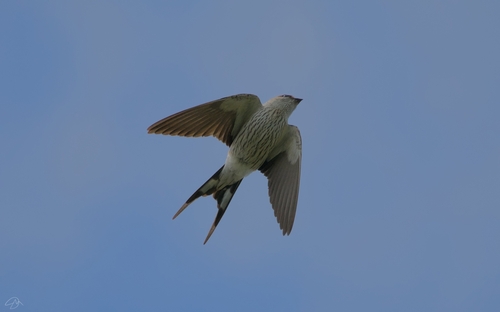 Golondrina Cabecirrufa
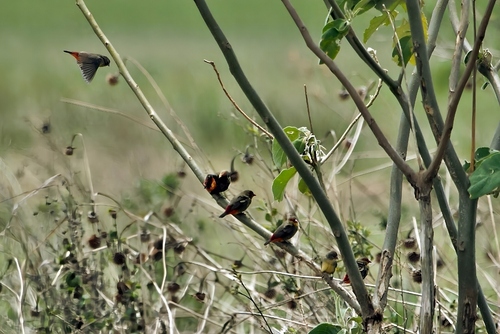 Bengalí Cebra
En breve
La Golondrina Cabecirrufa y el Bengalí Cebra se distinguen fácilmente por su apariencia general y comportamiento. La golondrina es un insectívoro aéreo más grande con un cuerpo aerodinámico, mientras que el bengalí es un pequeño comedor de semillas que vive en el suelo con una forma más compacta.
Consejos de identificación
Busque el vuelo aéreo de la Golondrina Cabecirrufa y sus partes inferiores rayadas. Observe el comportamiento terrestre del Bengalí Cebra y su plumaje más uniforme.
Tamaño
La Golondrina Cabecirrufa es significativamente más grande que el Bengalí Cebra.
Plumaje
La Golondrina Cabecirrufa tiene un patrón de rayas distintivo en sus partes inferiores y una rabadilla roja, mientras que el Bengalí Cebra tiene un plumaje más uniforme con una coloración sutil.
Comportamiento
Las Golondrinas Cabecirrufa a menudo se ven volando alto en el cielo, atrapando insectos en el aire. Los Bengalíes Cebra se encuentran típicamente buscando alimento en el suelo o en vegetación baja.
Hábitat
Las Golondrinas Cabecirrufa se encuentran generalmente en áreas abiertas y cerca del agua, mientras que los Bengalíes Cebra prefieren pastizales y sabanas.