
Ánsar Careto vs Barnacla Carinegra
Anser albifrons frente a Branta bernicla
Juega un quiz con Ánsar Careto y Barnacla Carinegra
 Ánsar Careto
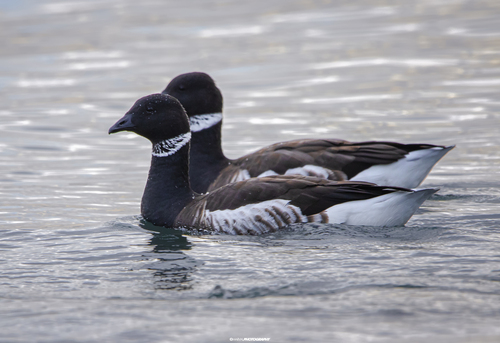 Barnacla Carinegra
En breve
El Ánsar Careto y la Barnacla Carinegra se pueden distinguir principalmente por su plumaje y la coloración de su pico. El Ánsar Careto tiene una distintiva mancha blanca en la base de su pico y patas naranjas, mientras que la Barnacla Carinegra carece de la mancha facial blanca y tiene patas negras. Ambas especies son migratorias, pero prefieren diferentes hábitats durante la cría y el invierno.
Consejos de identificación
Busque la mancha blanca en la base del pico y las patas naranjas para identificar al Ánsar Careto. En contraste, la Barnacla Carinegra tendrá patas negras y no tendrá mancha facial blanca. Considere el hábitat: los Ánsares Caretos son más propensos a encontrarse en áreas interiores, mientras que las Barnaclas Carinegras se encuentran típicamente en regiones costeras.
Plumaje
El Ánsar Careto presenta una mancha blanca en la base de su pico y patas naranjas, mientras que la Barnacla Carinegra carece de esta mancha facial blanca y tiene patas negras. El Ánsar Careto también tiende a tener un plumaje marrón más moteado con un vientre blanco, mientras que la Barnacla Carinegra tiene un plumaje más oscuro y uniforme dependiendo de la subespecie (de vientre pálido, de vientre oscuro o de vientre gris).
Hábitat
El Ánsar Careto cría en hábitats de tundra y taiga y pasa el invierno en pastizales semiáridos, humedales y campos agrícolas. En contraste, la Barnacla Carinegra cría en regiones árticas y pasa el invierno en áreas costeras, a menudo en marismas salinas.