
Ánsar Careto vs Barnacla Nené
Anser albifrons frente a Branta sandvicensis
Juega un quiz con Ánsar Careto y Barnacla Nené
 Ánsar Careto
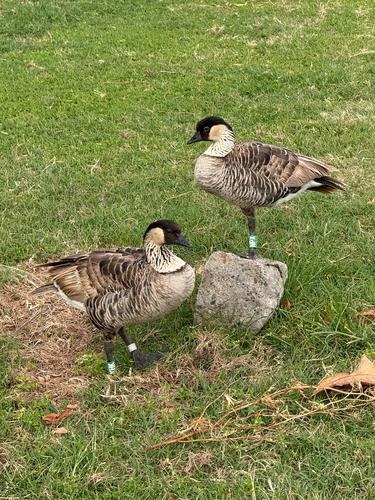 Barnacla Nené
En breve
El Ánsar Careto y la Barnacla Nené se pueden distinguir por su plumaje y preferencias de hábitat. El Ánsar Careto tiene una mancha blanca en la base del pico y se encuentra en una amplia variedad de hábitats en el Hemisferio Norte, mientras que la Barnacla Nené es endémica de Hawái y tiene un plumaje más uniforme sin marcas faciales blancas.
Consejos de identificación
- Busca la mancha blanca en la base del pico del Ánsar Careto.
- Nota el hábitat: Ánsar Careto en tundra o humedales vs. Barnacla Nené en praderas hawaianas.
- Observa el patrón del cuello: rayado en la Barnacla Nené, liso en el Ánsar Careto.
Plumaje
El Ánsar Careto presenta una distintiva mancha blanca en la base de su pico y un cuerpo generalmente moteado de marrón. En contraste, la Barnacla Nené tiene un plumaje más uniforme sin marcas faciales blancas, y su cuello a menudo está rayado de negro y blanco.
Hábitat
El Ánsar Careto es altamente migratorio, criando en hábitats de tundra y taiga y invernando en praderas y humedales en el Hemisferio Norte. La Barnacla Nené no es migratoria y está restringida a las Islas Hawaianas, encontrándose típicamente en praderas, matorrales y laderas volcánicas.