
Soterillo Picudo vs Cucarachero Ruiseñor Norteño
Ramphocaenus melanurus frente a Microcerculus philomela
Juega un quiz con Soterillo Picudo y Cucarachero Ruiseñor Norteño
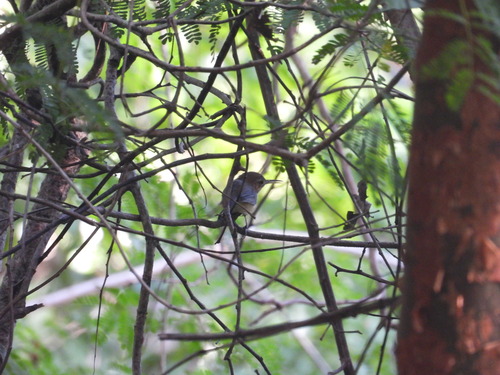 Soterillo Picudo
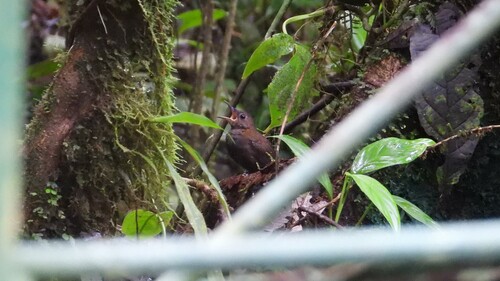 Cucarachero Ruiseñor Norteño
En breve
El Soterillo Picudo y el Cucarachero Ruiseñor Norteño se pueden distinguir por sus preferencias de hábitat y comportamiento. El Soterillo Picudo se encuentra a menudo en enredos densos por encima del suelo, mientras que el Cucarachero Ruiseñor Norteño es más terrestre, caminando por el suelo del bosque. Ambas especies se escuchan más a menudo que se ven, pero sus cantos difieren significativamente.
Consejos de identificación
1. Observe el comportamiento y hábitat del ave: los Soterillos Picudos suelen estar por encima del suelo en vegetación densa, mientras que los Cucaracheros Ruiseñores Norteños están en el suelo del bosque. 2. Escuche el canto distintivo, trinado y agitado del Soterillo Picudo. 3. Note el plumaje: los Soterillos Picudos pueden tener gargantas con estrías oscuras y partes inferiores de color más cálido, mientras que los Cucaracheros Ruiseñores Norteños son de un marrón oscuro uniforme.
Plumaje
El Soterillo Picudo muestra variación en el plumaje, con algunas poblaciones teniendo gargantas con estrías oscuras y partes inferiores de color más cálido. En contraste, el Cucarachero Ruiseñor Norteño es de un marrón oscuro uniforme con plumas con puntas estrechas de color negro.
Comportamiento
Los Soterillos Picudos tienden a permanecer ocultos dentro de la vegetación densa por encima del suelo, mientras que los Cucaracheros Ruiseñores Norteños caminan por el suelo del bosque, moviendo su posterior.
Hábitat
Los Soterillos Picudos se encuentran típicamente en enredos densos de vegetación, a menudo bien por encima del suelo. Los Cucaracheros Ruiseñores Norteños prefieren el suelo del bosque.
Voz
El Soterillo Picudo se localiza mejor por su canto agitado y trinado, mientras que el Cucarachero Ruiseñor Norteño se identifica más a menudo por su canto, que no se describe en detalle aquí.
Soterillo Picudo · Cucarachero Ruiseñor Norteño · Mis aves difíciles