
Titirijí Cabecicanela vs Titirijí Frentirrojo
Poecilotriccus plumbeiceps frente a Poecilotriccus latirostris
Juega un quiz con Titirijí Cabecicanela y Titirijí Frentirrojo
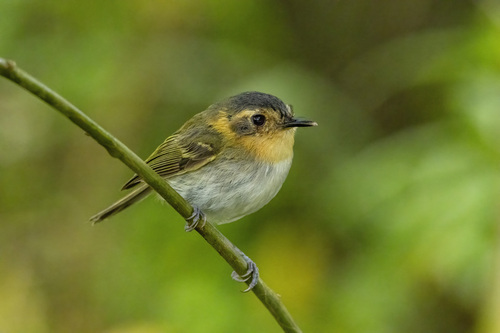 Titirijí Cabecicanela
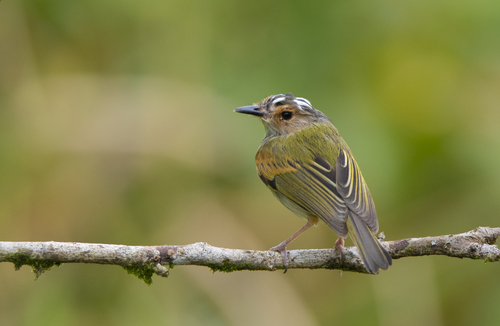 Titirijí Frentirrojo
En breve
El Titirijí Cabecicanela se distingue por sus brillantes lados canela en la cabeza con un punto oliváceo contrastante en los auriculares, mientras que el Titirijí Frentirrojo presenta un evidente lavado rufo sobre los loretes y la cara. Ambas especies son similares en comportamiento y hábitat, a menudo forrajeando solas o en parejas en el sotobosque de bosques húmedos.
Consejos de identificación
- Busca los lados canela y el punto oliváceo en el Titirijí Cabecicanela.
- Nota el lavado rufo en la cara y las barras alares del Titirijí Frentirrojo.
- Presta atención a las vocalizaciones con experiencia, ya que pueden ser sutilmente diferentes.
Plumaje
El Titirijí Cabecicanela tiene brillantes lados canela en la cabeza con un punto oliváceo en los auriculares y una corona olivácea. El Titirijí Frentirrojo muestra un lavado rufo sobre los loretes y la cara, así como barras alares.
Comportamiento
Ambas especies forrajean solitarias o en parejas y rara vez se unen a bandadas de especies mixtas.
Hábitat
Ambas especies habitan el sotobosque de bosques húmedos.
Voz
Las vocalizaciones son similares pero pueden separarse con cuidado y experiencia.
Titirijí Cabecicanela · Titirijí Frentirrojo · Mis aves difíciles