
Collalba Afgana vs Suimanga del Nilo
Oenanthe chrysopygia frente a Hedydipna metallica
Juega un quiz con Collalba Afgana y Suimanga del Nilo
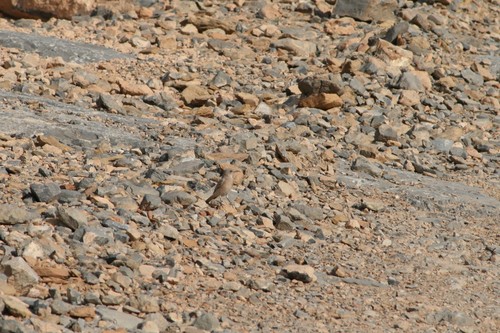 Collalba Afgana
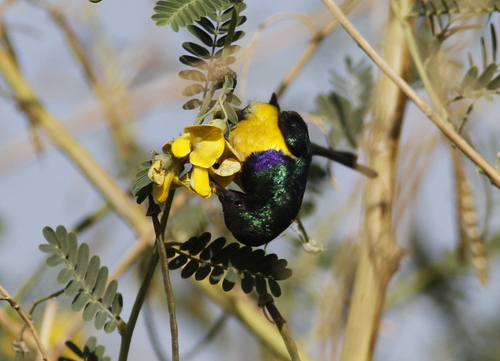 Suimanga del Nilo
En breve
La Collalba Afgana y el Suimanga del Nilo son distintos tanto en estructura como en hábitat. La Collalba Afgana es un ave terrestre con una constitución más robusta, mientras que el Suimanga del Nilo es una especie esbelta y arbórea. Observar sus entornos preferidos y estructuras corporales es clave para distinguirlos.
Consejos de identificación
Busque la Collalba Afgana en áreas rocosas y abiertas y note su constitución más robusta. En contraste, el Suimanga del Nilo estará en áreas vegetadas, mostrando plumaje iridiscente y una forma esbelta.
Tamaño
La Collalba Afgana es generalmente más robusta y más grande que el esbelto Suimanga del Nilo.
Plumaje
La Collalba Afgana típicamente tiene una paleta de colores más apagada en comparación con el plumaje iridiscente y colorido del Suimanga del Nilo.
Comportamiento
La Collalba Afgana se ve a menudo en el suelo o en posaderos bajos, mientras que el Suimanga del Nilo es más probable que se observe en árboles o arbustos, a menudo flotando o moviéndose entre flores.
Hábitat
Las Collalbas Afgana se encuentran en entornos rocosos y áridos, mientras que los Suimangas del Nilo prefieren áreas exuberantes y vegetadas, como jardines y hábitats ribereños.