
Chara Piñonera vs Chara de Steller
Gymnorhinus cyanocephalus frente a Cyanocitta stelleri
Juega un quiz con Chara Piñonera y Chara de Steller
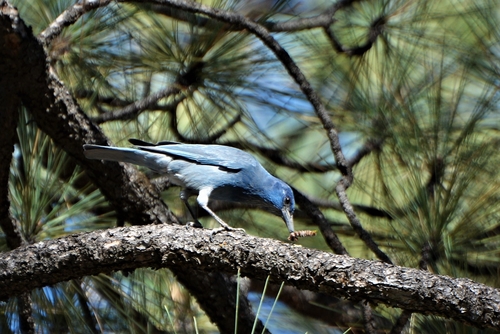 Chara Piñonera
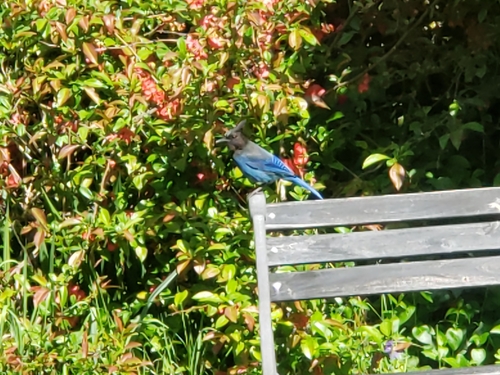 Chara de Steller
En breve
La Chara Piñonera y la Chara de Steller son ambas charas azules que se encuentran en América del Norte, pero se pueden distinguir por su estructura y comportamiento. La Chara Piñonera carece de cresta y tiene un plumaje azul-gris más uniforme, mientras que la Chara de Steller es notable por su cresta prominente y su plumaje contrastante negro y azul.
Consejos de identificación
Busque la falta de una cresta y el color azul-gris uniforme para identificar la Chara Piñonera. En contraste, la cresta negra prominente y el plumaje contrastante negro y azul son características clave de la Chara de Steller. Observar el comportamiento también puede ayudar: grandes bandadas sociales sugieren Charas Piñoneras, mientras que grupos más pequeños o parejas cerca de la actividad humana sugieren Charas de Steller.
Plumaje
Las Charas Piñoneras tienen un plumaje azul-gris uniforme sin cresta, lo que les da una apariencia más aerodinámica. En contraste, las Charas de Steller tienen una cresta negra llamativa y una combinación de plumaje negro y azul, con la cabeza y la parte superior del cuerpo típicamente más oscuras que el resto del cuerpo.
Comportamiento
Las Charas Piñoneras son altamente sociales y a menudo se encuentran en grandes bandadas, especialmente durante el invierno. Son conocidas por su comportamiento de cría cooperativa y almacenamiento de semillas. Las Charas de Steller, aunque también son sociales, se ven más comúnmente en parejas o grupos pequeños y son conocidas por su comportamiento audaz alrededor de la vivienda humana.
Hábitat
Las Charas Piñoneras están estrechamente asociadas con los bosques de pino piñonero en las laderas y pendientes más bajas de las montañas del oeste de los Estados Unidos. Las Charas de Steller habitan una gama más amplia de áreas forestales, incluidos bosques de coníferas y mixtos, y a menudo se ven a elevaciones más bajas durante el invierno.