Birdr

Paloma Isleña vs Tórtola Rosigrís

Patagioenas squamosa frente a Streptopelia roseogrisea

Juega un quiz con Paloma Isleña y Tórtola Rosigrís
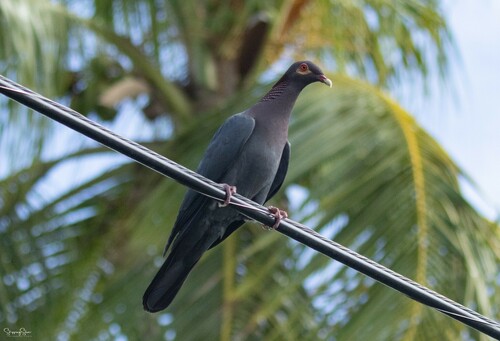
Paloma Isleña (Patagioenas squamosa) Paloma Isleña
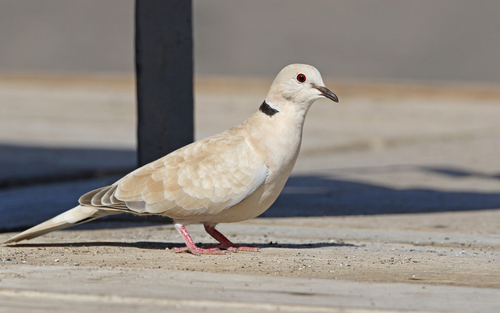
Tórtola Rosigrís (Streptopelia roseogrisea) Tórtola Rosigrís

Medios

Cargando…

En breve

La Paloma Isleña y la Tórtola Rosigrís se pueden distinguir por su plumaje y preferencias de hábitat. La Paloma Isleña tiene bordes escamosos de color beige pálido en las plumas de la nuca, mientras que la Tórtola Rosigrís carece de esta característica. El hábitat también es una diferencia clave, ya que la Paloma Isleña se encuentra en áreas boscosas, mientras que la Tórtola Rosigrís se asocia típicamente con hábitats más abiertos.

Consejos de identificación

Busque los bordes escamosos de color beige pálido en la nuca de la Paloma Isleña. Considere el hábitat: las áreas boscosas sugieren Paloma Isleña, mientras que las áreas abiertas son más propensas a albergar la Tórtola Rosigrís.

Plumaje

La Paloma Isleña presenta bordes escamosos de color beige pálido en las plumas de la nuca, que están ausentes en la Tórtola Rosigrís. La Tórtola Rosigrís no tiene ningún patrón escamoso distintivo en su plumaje.

Hábitat

La Paloma Isleña es común en una variedad de hábitats boscosos, incluidos bosques primarios de tierras bajas y montanos, así como bordes de bosques y bosques secundarios. En contraste, la Tórtola Rosigrís se encuentra típicamente en hábitats más abiertos.

Enviar una descripción mejor

Usa las mismas secciones que la comparación. El texto se publica al momento.

The Scaly-naped Pigeon and the African Collared Dove can be distinguished by their plumage and habitat preferences. The Scaly-naped Pigeon has distinctive pale buff scaly edges on its nape feathers, while the African Collared Dove lacks this feature. Habitat is also a key difference, as the Scaly-naped Pigeon is found in forested areas, whereas the African Collared Dove is typically associated with more open habitats.

Look for the pale buff scaly edges on the nape of the Scaly-naped Pigeon. Consider the habitat: forested areas suggest Scaly-naped Pigeon, while open areas are more likely to host the African Collared Dove.

The Scaly-naped Pigeon features pale buff scaly edges on the nape feathers, which is absent in the African Collared Dove. The African Collared Dove does not have any distinctive scaly pattern on its plumage.

The Scaly-naped Pigeon is common in a variety of forested habitats, including primary lowland and montane forests, as well as forest edges and secondary forests. In contrast, the African Collared Dove is typically found in more open habitats.

¿Descartar los cambios?

Tienes ediciones sin guardar. Si sales ahora, se perderán.

Paloma Isleña · Tórtola Rosigrís · Mis aves difíciles