
Cacique Solitario vs Cacique Lomirrojo
Cacicus solitarius frente a Cacicus haemorrhous
Juega un quiz con Cacique Solitario y Cacique Lomirrojo
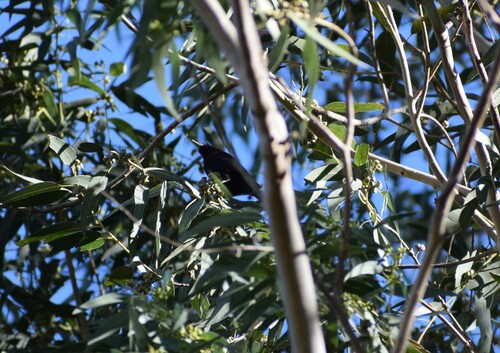 Cacique Solitario
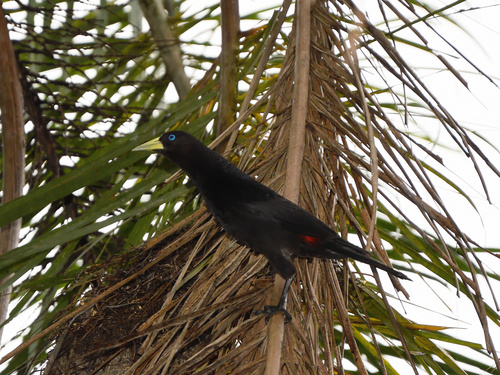 Cacique Lomirrojo
En breve
El Cacique Solitario es completamente negro con un ojo oscuro y un pico casi blanco en forma de cincel, mientras que el Cacique Lomirrojo presenta una distintiva rabadilla roja y un iris azul. La rabadilla roja del Cacique Lomirrojo puede estar oculta cuando está posado, haciendo que el color del ojo sea un diferenciador confiable.
Consejos de identificación
- Busca el ojo oscuro del Cacique Solitario frente al iris azul del Cacique Lomirrojo. 2. Verifica la rabadilla roja del Cacique Lomirrojo, especialmente en vuelo, ya que puede estar oculta cuando está posado. 3. Nota el pico casi blanco en forma de cincel del Cacique Solitario.
Plumaje
El Cacique Solitario es completamente negro, mientras que el Cacique Lomirrojo es mayormente negro con una brillante rabadilla roja que puede estar oculta por alas cerradas. El Cacique Lomirrojo también tiene un brillo azulado en los machos.
Comportamiento
El Cacique Solitario se encuentra a menudo solo o en parejas, mientras que el comportamiento social del Cacique Lomirrojo no se especifica aquí.
Hábitat
El Cacique Solitario habita en el sotobosque hasta la parte media del dosel en bosques pantanosos o bosques cercanos al agua, a menudo en enredaderas. La preferencia de hábitat del Cacique Lomirrojo no se detalla aquí.
Voz
El Cacique Solitario tiene un repertorio vocal variado, que incluye llamados de sonido extraño y metódico y mimetismo, mientras que las vocalizaciones del Cacique Lomirrojo no se describen aquí.