
Trepatroncos Manchado vs Trepatroncos Dorsioliva
Xiphorhynchus erythropygius frente a Xiphorhynchus triangularis
Juega un quiz con Trepatroncos Manchado y Trepatroncos Dorsioliva
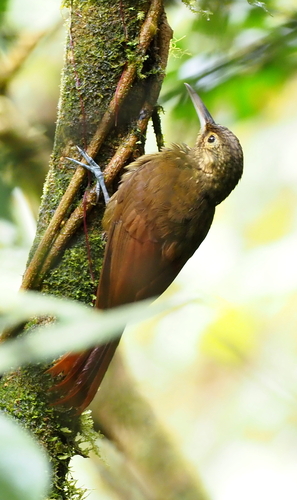 Trepatroncos Manchado
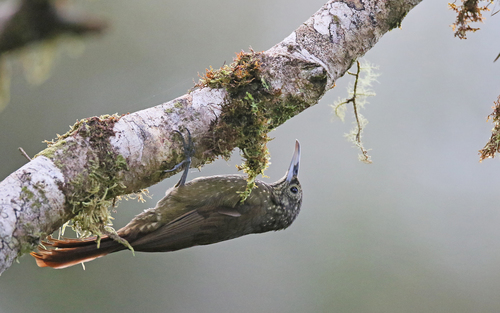 Trepatroncos Dorsioliva
En breve
El Trepatroncos Manchado y el Trepatroncos Dorsioliva se pueden distinguir por la forma de su pico y su vocalización. El Trepatroncos Manchado tiene un pico gris pizarra ligeramente curvado hacia abajo y una serie distintiva de notas resonantes en descenso, mientras que el Trepatroncos Dorsioliva presenta un pico robusto y bastante recto y suele ser silencioso.
Consejos de identificación
- Forma del pico: El Trepatroncos Manchado tiene un pico ligeramente curvado hacia abajo; el Trepatroncos Dorsioliva tiene un pico robusto y bastante recto.
- Vocalización: Escucha la serie descendente de notas resonantes del Trepatroncos Manchado.
- Hábitat: Nota la elevación; el Trepatroncos Dorsioliva se encuentra en bosques montanos (1000-2500m).
Plumaje
El Trepatroncos Manchado es de color oliva por encima y por debajo con espectáculos de color crema pálido y manchas color crema en la cabeza, el pecho y la espalda, aunque las poblaciones del sur carecen de manchas en la espalda. El Trepatroncos Dorsioliva es de color oliva-marrón por encima con alas y cola de oliva rufoso, y cabeza y partes inferiores de color marrón apagado marcadas con manchas color crema.
Comportamiento
Ambas especies forrajean trepando por los troncos y ramas de los árboles, pero el Trepatroncos Dorsioliva es conocido por forrajear solo o en bandadas de especies mixtas y suele ser silencioso.
Hábitat
El Trepatroncos Dorsioliva es inusual por estar restringido a bosques montanos de 1000 a 2500 metros, mientras que el Trepatroncos Manchado se encuentra en copas de bosques densos.
Voz
El Trepatroncos Manchado es conocido por su serie distintiva de notas resonantes en descenso, mientras que el Trepatroncos Dorsioliva suele ser silencioso.
Trepatroncos Manchado · Trepatroncos Dorsioliva · Mis aves difíciles