
Tovacá Críptico vs Espinero Pechicanelo
Chamaeza meruloides frente a Phacellodomus ferrugineigula
Juega un quiz con Tovacá Críptico y Espinero Pechicanelo
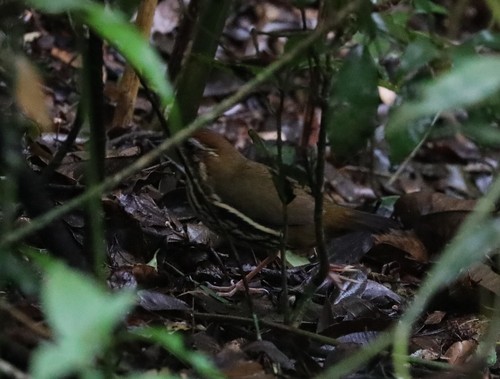 Tovacá Críptico
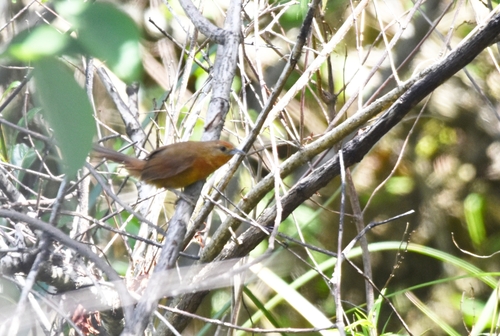 Espinero Pechicanelo
En breve
El Tovacá Críptico y el Espinero Pechicanelo son distintos tanto en apariencia como en hábitat. El Tovacá Críptico se encuentra típicamente en bosques montanos húmedos del sureste de Brasil, mientras que el Espinero Pechicanelo no se menciona en el mismo contexto. El Tovacá Críptico se observa a menudo en el suelo o cerca de este, en contraste con el nicho ecológico diferente del espinero.
Consejos de identificación
Busca el pecho naranja: Esta es una característica distintiva del Espinero Pechicanelo y no está presente en el Tovacá Críptico. Considera el hábitat: El Tovacá Críptico se encuentra en bosques montanos húmedos, lo que puede ayudar a diferenciarlo del espinero.
Plumaje
El Tovacá Críptico no tiene el pecho naranja que es característico del Espinero Pechicanelo. Esta característica del plumaje es una diferencia clave entre las dos especies.
Comportamiento
El Tovacá Críptico se encuentra principalmente en el suelo o cerca de este, cantando ocasionalmente en lo alto de los árboles altos. El comportamiento del Espinero Pechicanelo no se detalla en las notas.
Hábitat
El Tovacá Críptico es endémico del sureste de Brasil, ocurriendo en bosques montanos húmedos entre 200 y 1500 metros. El hábitat del Espinero Pechicanelo no se especifica en las notas, sugiriendo una preferencia ecológica diferente.