
Birdr

Cotorra Catana vs Aratinga Pertinaz

Pyrrhura hoffmanni frente a Eupsittula pertinax

Juega un quiz con Cotorra Catana y Aratinga Pertinaz
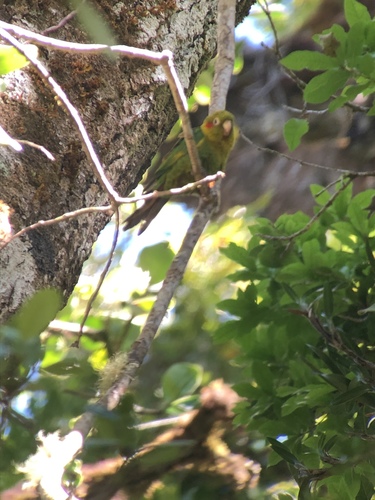
Cotorra Catana (Pyrrhura hoffmanni) Cotorra Catana
Aratinga Pertinaz (Eupsittula pertinax) Aratinga Pertinaz

Medios

Cargando…

En breve

La Cotorra Catana y el Aratinga Pertinaz se pueden distinguir por su plumaje y preferencias de hábitat. La Cotorra Catana tiene alas amarillentas-verdosas distintivas, mientras que el Aratinga Pertinaz muestra más variación en la coloración de la cara, con tonos amarillos y naranjas. La elección del hábitat también difiere, con la Cotorra Catana favoreciendo los bosques montanos y el Aratinga Pertinaz encontrado en áreas más abiertas o semiabiertas.

Consejos de identificación

Busque las alas amarillentas-verdosas de la Cotorra Catana como un identificador principal. Observe la coloración de la cara del Aratinga Pertinaz, que puede incluir tonos amarillos y naranjas. Considere el hábitat: los bosques montanos sugieren Cotorra Catana, mientras que las áreas abiertas sugieren Aratinga Pertinaz.

Plumaje

La Cotorra Catana presenta alas amarillentas-verdosas, que son una característica distintiva clave. En contraste, el Aratinga Pertinaz tiene una coloración de cara más variable, mostrando a menudo tonos amarillos y naranjas, y carece de la coloración de alas distintiva de la Cotorra Catana.

Hábitat

La Cotorra Catana se encuentra típicamente en bosques montanos, mientras que el Aratinga Pertinaz prefiere hábitats abiertos o semiabiertos como matorrales áridos, bosques caducifolios y jardines.

Enviar una descripción mejor

Usa las mismas secciones que la comparación. El texto se publica al momento.

The Sulphur-winged Parakeet and the Brown-throated Parakeet can be distinguished by their plumage and habitat preferences. The Sulphur-winged Parakeet has distinctive yellowish-green wings, while the Brown-throated Parakeet shows more variation in face coloration, with yellow and orange tones. Habitat choice also differs, with the Sulphur-winged favoring montane forests and the Brown-throated found in more open or semi-open areas.

Look for the yellowish-green wings of the Sulphur-winged Parakeet as a primary identifier. Note the face coloration of the Brown-throated Parakeet, which can include yellow and orange tones. Consider the habitat: montane forests suggest Sulphur-winged, while open areas suggest Brown-throated.

The Sulphur-winged Parakeet features yellowish-green wings, which are a key distinguishing feature. In contrast, the Brown-throated Parakeet has a more variable face coloration, often showing yellow and orange tones, and lacks the distinct wing coloration of the Sulphur-winged.

The Sulphur-winged Parakeet is typically found in montane forests, whereas the Brown-throated Parakeet prefers open or semi-open habitats such as arid scrub, deciduous forests, and gardens.

¿Descartar los cambios?

Tienes ediciones sin guardar. Si sales ahora, se perderán.

Cotorra Catana · Aratinga Pertinaz · Mis aves difíciles