
Correlimos Batitú vs Zarapito Americano
Bartramia longicauda frente a Numenius americanus
Juega un quiz con Correlimos Batitú y Zarapito Americano
 Correlimos Batitú
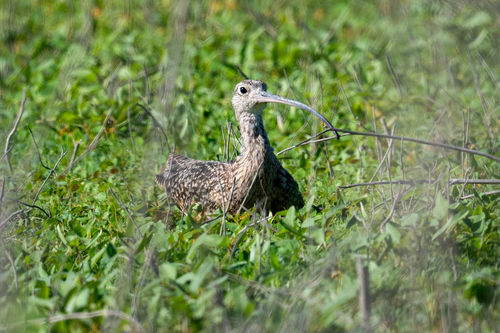 Zarapito Americano
En breve
El Correlimos Batitú y el Zarapito Americano se pueden distinguir principalmente por la forma y el tamaño de su pico. El Correlimos Batitú tiene un pico corto y recto, mientras que el Zarapito Americano presenta un pico largo y curvado hacia abajo. Ambas especies habitan en praderas, pero el Zarapito Americano es notablemente más grande.
Consejos de identificación
Forma del Pico: El Correlimos Batitú tiene un pico corto y recto; el Zarapito Americano tiene un pico largo y curvado. Tamaño: El Zarapito Americano es mucho más grande.
Tamaño
El Zarapito Americano es significativamente más grande que el Correlimos Batitú.
Hábitat
Ambas especies se encuentran en hábitats de pradera, pero el Zarapito Americano también frecuenta llanuras de barro intermareales durante el invierno.