
Golondrina Australiana vs Anteojitos Dorsigrís
Hirundo neoxena frente a Zosterops lateralis
Juega un quiz con Golondrina Australiana y Anteojitos Dorsigrís
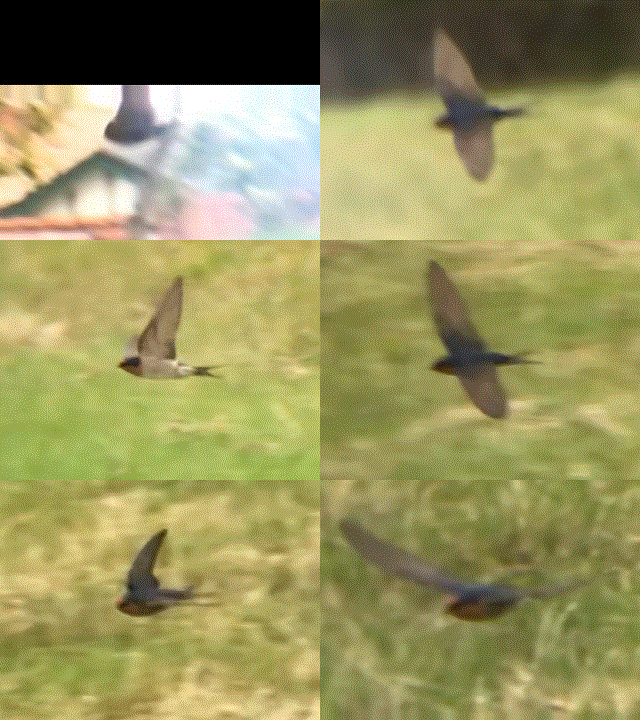 Golondrina Australiana
 Anteojitos Dorsigrís
En breve
La Golondrina Australiana y el Anteojitos Dorsigrís se distinguen fácilmente por su estructura y comportamiento. La Golondrina Australiana es un ave pequeña y aerodinámica con alas largas y puntiagudas y una cola bifurcada, mientras que el Anteojitos Dorsigrís es más compacto con un distintivo anillo ocular blanco. Ambas especies tienen diferentes patrones de vuelo y hábitats.
Consejos de identificación
Busca la cola bifurcada y el vuelo ágil de la Golondrina Australiana. Nota el anillo ocular blanco y el plumaje verde olivo del Anteojitos Dorsigrís. Observa el hábitat: áreas abiertas para golondrinas, áreas más vegetadas para anteojitos.
Tamaño
La Golondrina Australiana es generalmente más esbelta con una envergadura más larga en comparación con el más compacto Anteojitos Dorsigrís.
Plumaje
La Golondrina Australiana tiene un cuerpo superior negro azulado brillante con una frente y garganta de color marrón rojizo, mientras que el Anteojitos Dorsigrís se caracteriza por sus partes superiores verde olivo y un conspicuo anillo ocular blanco.
Comportamiento
Las Golondrinas Australianas a menudo se ven en vuelo rápido y ágil, atrapando insectos en el aire. Los Anteojitos Dorsigrís son más propensos a ser vistos revoloteando entre el follaje, a menudo en pequeños grupos, buscando frutas e insectos.
Hábitat
Las Golondrinas Australianas se encuentran típicamente en áreas abiertas, a menudo cerca del agua, mientras que los Anteojitos Dorsigrís se encuentran más comúnmente en jardines, bosques y matorrales.
Golondrina Australiana · Anteojitos Dorsigrís · Mis aves difíciles