Birdr

Pipit africain vs Pipit à long bec

Anthus cinnamomeus contre Anthus similis

Faire un quiz avec Pipit africain et Pipit à long bec
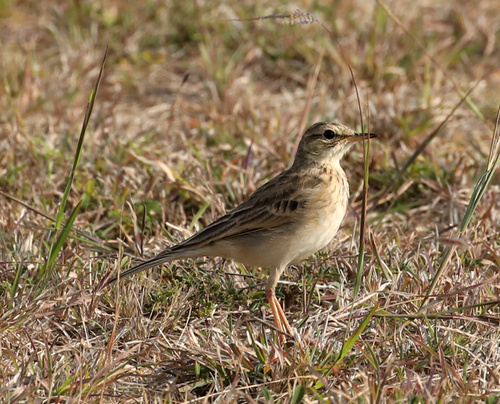
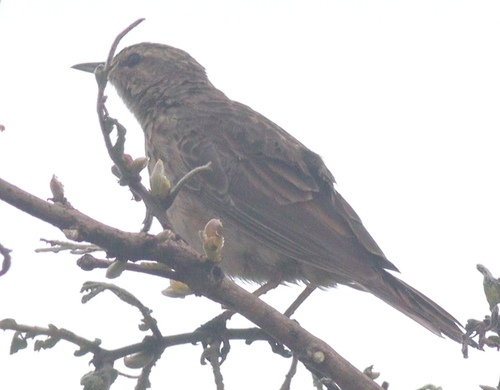
Pipit africain (Anthus cinnamomeus) Pipit africain
Pipit à long bec (Anthus similis) Pipit à long bec

Médias

Chargement…

En bref

Le Pipit africain et le Pipit à long bec peuvent être distingués par leurs préférences d'habitat et les détails de leur plumage. Le Pipit à long bec est généralement plus sombre avec une bande malaire distincte et des bordures sableuses, tandis que le Pipit africain n'a pas ces marques spécifiques. L'habitat est un facteur clé de différenciation, le Pipit à long bec préférant les pentes pierreuses ou rocheuses.

Conseils d’identification

  1. Recherchez la bande malaire distincte et les bordures sableuses sur le Pipit à long bec. 2. Observez l'habitat : les Pipits à long bec se trouvent souvent sur des pentes rocheuses. 3. Notez le plumage global plus sombre du Pipit à long bec par rapport au Pipit africain.

Plumage

Le Pipit à long bec est très brun terreux foncé avec des bordures sableuses au-dessus et sableux avec de fortes stries en dessous, présentant une bande malaire distincte. Le Pipit africain n'a pas ces marques spécifiques.

Habitat

Le Pipit à long bec se trouve généralement sur des pentes pierreuses ou rocheuses avec quelques broussailles ou bois ouverts. Les préférences d'habitat du Pipit africain ne sont pas spécifiées dans les notes.

Envoyer une meilleure description

Utilise les mêmes sections que la comparaison. Ton texte est publié tout de suite.

The African Pipit and Long-billed Pipit can be distinguished by their habitat preferences and plumage details. The Long-billed Pipit is generally darker with a distinct malar stripe and sandy-buff fringes, while the African Pipit does not have these specific markings. Habitat is a key differentiator, with the Long-billed Pipit favoring stony or rocky hillsides.

  1. Look for the distinct malar stripe and sandy-buff fringes on the Long-billed Pipit. 2. Observe the habitat: Long-billed Pipits are often on rocky hillsides. 3. Note the overall darker plumage of the Long-billed Pipit compared to the African Pipit.

The Long-billed Pipit is very dark earth-brown with sandy-buff fringes above and sandy-buff with heavy streaks below, featuring a distinct malar stripe. The African Pipit lacks these specific markings.

The Long-billed Pipit is typically found on stony or rocky hillsides with some scrub or open woodland. The African Pipit's habitat preferences are not specified in the notes.

Abandonner tes modifications ?

Tu as des modifications non enregistrées. Si tu pars maintenant, elles seront perdues.

Pipit africain · Pipit à long bec · Mes oiseaux difficiles