
Canard d'Amérique vs Piranga vermillon
Mareca americana contre Piranga rubra
Faire un quiz avec Canard d'Amérique et Piranga vermillon
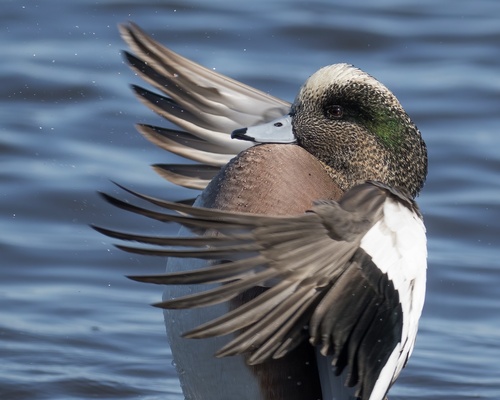 Canard d'Amérique
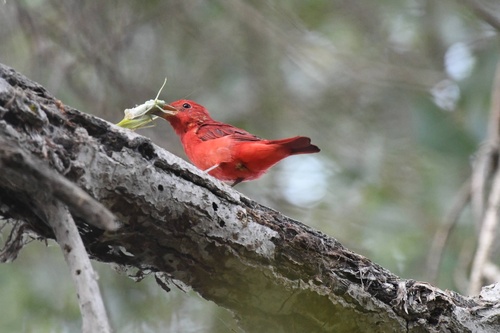 Piranga vermillon
En bref
Le Canard d'Amérique et le Piranga vermillon se distinguent facilement par leurs préférences d'habitat et leur plumage. Le Canard d'Amérique est un oiseau aquatique avec une tache blanche distinctive sur l'aile et un spéculum vert, tandis que le Piranga vermillon est un oiseau chanteur connu pour son plumage rouge frappant chez les mâles. Ils habitent des environnements différents, le canard préférant les zones humides et le tanager préférant les zones boisées.
Conseils d’identification
1. Recherchez la tache blanche audacieuse sur l'aile et le spéculum vert chez les mâles Canard d'Amérique en vol. 2. Notez l'habitat : zones humides pour les canards, zones boisées pour les tanagers. 3. Écoutez l'appel aigu du Canard d'Amérique, qui est différent des appels des oiseaux chanteurs du Piranga vermillon.
Plumage
Les mâles Canard d'Amérique ont une tache blanche audacieuse sur l'aile et un spéculum vert, tandis que les mâles Piranga vermillon sont remarqués pour leur plumage rouge frappant. Les femelles et les jeunes Canards d'Amérique ont une coloration plus atténuée par rapport au rouge vibrant des mâles Piranga vermillon.
Comportement
Les Canards d'Amérique sont rapides à s'envoler et ont un motif de vol rapide et erratique. Les Piranga vermillon sont plus susceptibles d'être vus en train de chercher des insectes et des fruits dans les arbres.
Habitat
Les Canards d'Amérique se trouvent généralement dans les zones humides, tandis que les Piranga vermillon habitent des zones boisées, en particulier les forêts riveraines.
Voix
Les Canards d'Amérique produisent un appel distinct, aigu, en trois notes, rappelant un jouet qui couine. Les notes ne fournissent pas de détails spécifiques sur la vocalisation du Piranga vermillon.
Canard d'Amérique · Piranga vermillon · Mes oiseaux difficiles