
Tisserin baya vs Capucin bec-de-plomb
Ploceus philippinus contre Euodice malabarica
Faire un quiz avec Tisserin baya et Capucin bec-de-plomb
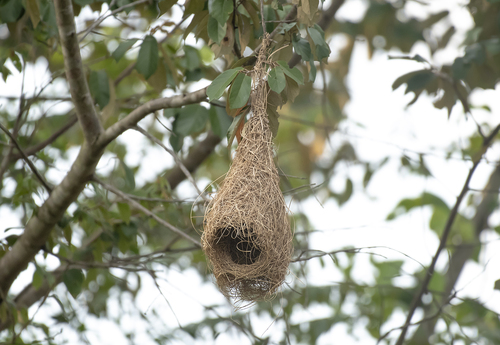 Tisserin baya
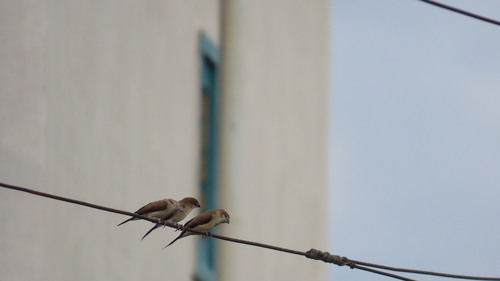 Capucin bec-de-plomb
En bref
Le Tisserin baya et le Capucin bec-de-plomb peuvent être distingués par leur forme et couleur de bec : le Tisserin baya a un bec conique et robuste, tandis que le Capucin bec-de-plomb a un bec plus mince et argenté. De plus, le Tisserin baya est connu pour ses nids tissés complexes, ce qui peut être un indice comportemental utile.
Conseils d’identification
- Forme et couleur de bec : Le Tisserin baya a un bec conique et robuste ; le Capucin bec-de-plomb a un bec mince et argenté. 2. Plumage nuptial : Recherchez du jaune vif sur la tête et la gorge des mâles Tisserins baya. 3. Comportement de nidification : Observez la présence de nids tissés suspendus chez les Tisserins baya.
Plumage
Le Tisserin baya montre généralement un plumage plus vibrant, en particulier chez les mâles en période de reproduction avec des têtes et des gorges jaunes vives, tandis que le Capucin bec-de-plomb a un plumage plus uniforme, brunâtre, avec un bec argenté distinctif.
Comportement
Les Tisserins baya sont connus pour leur comportement complexe de construction de nids, créant des nids suspendus à partir d'herbe et de fibres de palmier. Les Capucins bec-de-plomb sont souvent vus en groupes, se nourrissant de graines au sol.
Tisserin baya · Capucin bec-de-plomb · Mes oiseaux difficiles