
Dendrocygne à ventre noir vs Loriot indien
Dendrocygna autumnalis contre Oriolus kundoo
Faire un quiz avec Dendrocygne à ventre noir et Loriot indien
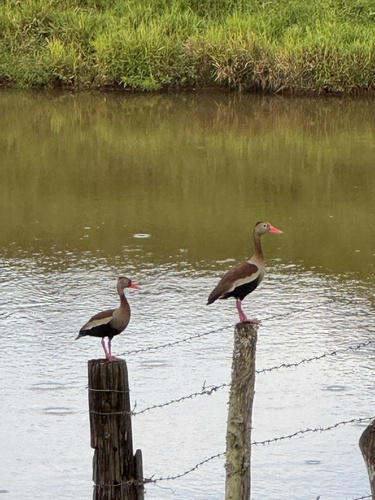 Dendrocygne à ventre noir
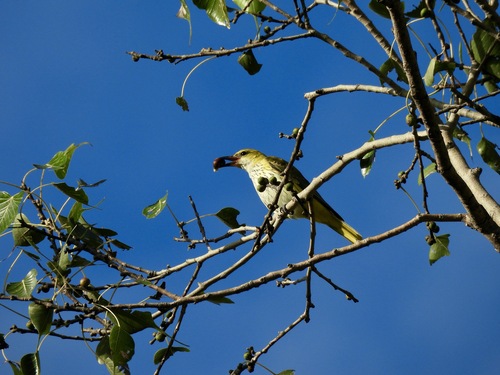 Loriot indien
En bref
Le Dendrocygne à ventre noir et le Loriot indien se distinguent facilement par leur taille, leur structure et leur plumage. Le canard est un oiseau aquatique avec un appel distinctif de sifflement, tandis que l'oriole est un passereau avec un plumage jaune vif.
Conseils d’identification
Regardez la taille et l'habitat : Le canard est beaucoup plus grand et se trouve près de l'eau ; l'oriole est plus petit et se trouve dans les arbres. Différences de plumage : Notez le ventre noir du canard et les taches blanches sur les ailes par rapport au corps jaune vif de l'oriole avec des ailes noires.
Taille
Le Dendrocygne à ventre noir est significativement plus grand que le Loriot indien.
Plumage
Le Dendrocygne à ventre noir a un corps principalement brun avec un ventre noir et des taches blanches sur les ailes, tandis que le Loriot indien est jaune vif avec des ailes et une queue noires.
Comportement
Le Dendrocygne à ventre noir est souvent vu en groupes près de l'eau, tandis que le Loriot indien est généralement solitaire ou en couples dans des zones boisées.
Habitat
Le Dendrocygne à ventre noir se trouve typiquement dans les zones humides et les étangs, tandis que le Loriot indien habite les forêts et les jardins.
Voix
Le Dendrocygne à ventre noir est connu pour ses appels distinctifs de sifflement, contrairement au Loriot indien.
Dendrocygne à ventre noir · Loriot indien · Mes oiseaux difficiles