
Coulicou à bec noir vs Colibri thalassin
Coccyzus erythropthalmus contre Colibri thalassinus
Faire un quiz avec Coulicou à bec noir et Colibri thalassin
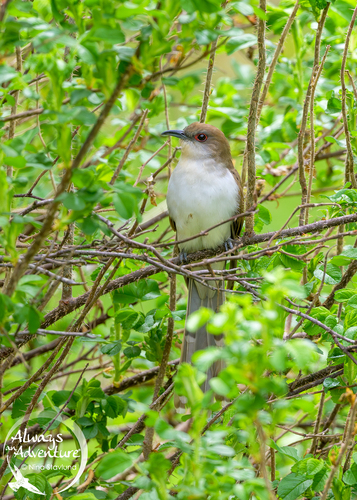 Coulicou à bec noir
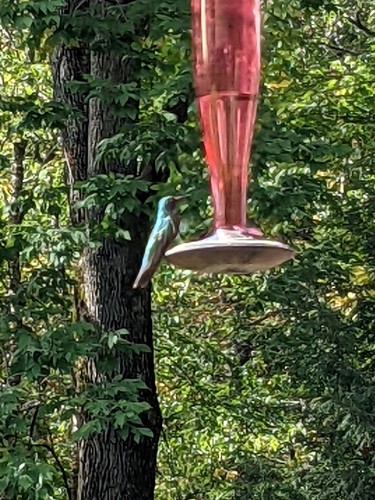 Colibri thalassin
En bref
Le Coulicou à bec noir et le Colibri thalassin sont facilement distinguables par leur structure et leur plumage. Le Coulicou à bec noir a un corps élancé et une longue queue, tandis que le Colibri thalassin est un colibri compact avec un plumage irisé vert et violet. Leurs habitats et comportements diffèrent également de manière significative.
Conseils d’identification
1. Recherchez le corps élancé et la longue queue du Coulicou à bec noir dans les zones boisées. 2. Notez le plumage irisé vert et violet du Colibri thalassin dans les bois ouverts. 3. Écoutez le cri 'cu-cu-cu' du Coulicou à bec noir lors des soirées de fin de printemps.
Taille
Le Coulicou à bec noir est plus grand et plus allongé par rapport au plus petit et compact Colibri thalassin.
Plumage
Le Coulicou à bec noir est principalement brun avec un bec noir et manque des couleurs vives du Colibri thalassin, qui se caractérise par son corps irisé vert et ses taches violettes aux oreilles.
Comportement
Le Coulicou à bec noir est secret et souvent silencieux, surtout pendant la migration, tandis que le Colibri thalassin est plus actif et visible, souvent vu en train de planer et de se nourrir de nectar.
Habitat
Le Coulicou à bec noir est associé à des habitats boisés denses, en particulier les forêts de conifères, tandis que le Colibri thalassin se trouve dans des bois ouverts et des jardins.
Voix
Le Coulicou à bec noir a un cri staccato et répétitif 'cu-cu-cu', tandis que les vocalisations du Colibri thalassin ne sont pas détaillées dans les notes.
Coulicou à bec noir · Colibri thalassin · Mes oiseaux difficiles