
Tétéma coq-de-bois vs Grive à bec noir
Formicarius analis contre Catharus gracilirostris
Faire un quiz avec Tétéma coq-de-bois et Grive à bec noir
 Tétéma coq-de-bois
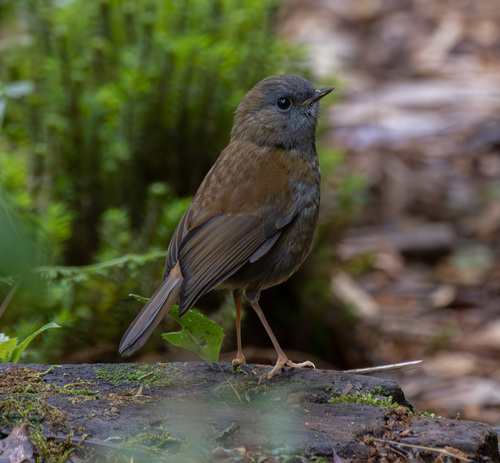 Grive à bec noir
En bref
Le Tétéma coq-de-bois et la Grive à bec noir sont distincts tant par leur apparence que par leur habitat. Le tétéma a un corps plus robuste et se trouve généralement dans des forêts de basse altitude, tandis que la grive à bec noir est plus élancée et habite des zones de haute montagne.
Conseils d’identification
Recherchez le visage noir du Tétéma coq-de-bois et sa préférence pour les forêts de plaine. En revanche, notez l'habitat de haute montagne et le chant mélodieux de la Grive à bec noir.
Taille
Le Tétéma coq-de-bois est généralement plus robuste et plus grand que la Grive à bec noir, qui est plus élancée.
Plumage
Le Tétéma coq-de-bois a un visage noir distinctif, tandis que la Grive à bec noir ne possède pas cette caractéristique et a une coloration plus uniforme.
Comportement
Les Tétémas coq-de-bois sont souvent vus marchant sur le sol de la forêt, tandis que les Grives à bec noir peuvent chercher de la nourriture à la fois au sol et dans la végétation basse.
Habitat
Les Tétémas coq-de-bois se trouvent dans des forêts de plaine, tandis que les Grives à bec noir habitent des forêts humides de haute montagne et des zones de paramo.
Voix
La Grive à bec noir est connue pour ses chants très mélodieux, tandis que les détails spécifiques de vocalisation du Tétéma coq-de-bois sont moins documentés.
Tétéma coq-de-bois · Grive à bec noir · Mes oiseaux difficiles