
Gobemouche bleu vs Gobemouche vert-de-gris
Cyanoptila cyanomelana contre Eumyias thalassinus
Faire un quiz avec Gobemouche bleu et Gobemouche vert-de-gris
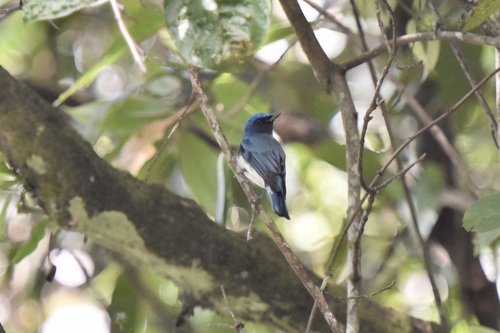 Gobemouche bleu
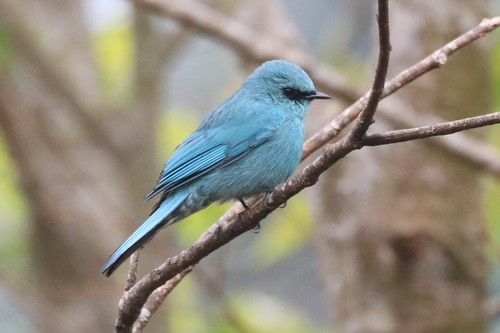 Gobemouche vert-de-gris
En bref
Le Gobemouche bleu et le Gobemouche vert-de-gris peuvent être distingués par leur plumage et leurs préférences d'habitat. Le Gobemouche bleu présente généralement une coloration bleu et blanc plus contrastée, tandis que le Gobemouche vert-de-gris se caractérise par son ton uniforme de bleu vert-de-gris. Les préférences d'habitat peuvent également aider à l'identification, le Gobemouche bleu favorisant les forêts denses et le Gobemouche vert-de-gris se trouvant souvent dans des zones boisées plus ouvertes.
Conseils d’identification
Recherchez le plumage contrasté bleu et blanc du Gobemouche bleu par rapport au bleu vert-de-gris uniforme du Gobemouche vert-de-gris. Considérez l'habitat : forêts denses pour le Gobemouche bleu, bois ouverts pour le Gobemouche vert-de-gris.
Plumage
Le Gobemouche bleu affiche un contraste frappant entre son dos bleu profond et son ventre blanc, tandis que le Gobemouche vert-de-gris est plus uniformément coloré d'un doux bleu vert-de-gris sur tout son corps.
Habitat
Les Gobemouches bleus se trouvent plus couramment dans des forêts denses, tandis que les Gobemouches vert-de-gris préfèrent les bois ouverts et les lisières de forêt.
Gobemouche bleu · Gobemouche vert-de-gris · Mes oiseaux difficiles