
Hypolaïs bottée vs Rousserolle mandchoue
Iduna caligata contre Acrocephalus tangorum
Faire un quiz avec Hypolaïs bottée et Rousserolle mandchoue
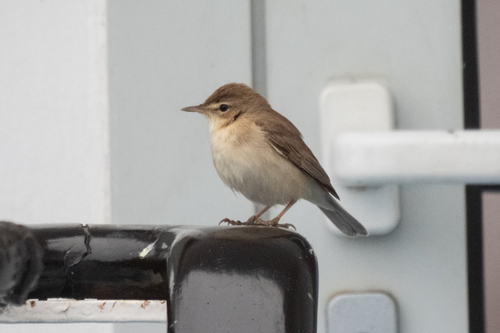 Hypolaïs bottée
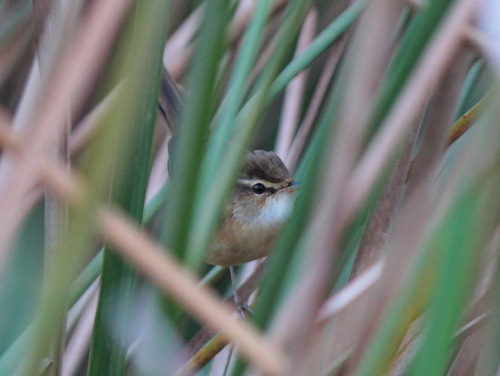 Rousserolle mandchoue
En bref
La Hypolaïs bottée et la Rousserolle mandchoue peuvent être distinguées par leur structure et leurs préférences d'habitat. La Hypolaïs bottée a une construction plus compacte avec un bec plus court et une projection primaire plus courte, tandis que la Rousserolle mandchoue est plus allongée avec un bec plus long. L'habitat est également un facteur clé de différenciation, la Hypolaïs bottée préférant les zones sèches et ouvertes, tandis que la Rousserolle mandchoue préfère les roselières denses.
Conseils d’identification
- Structure : Recherchez le bec plus court et la projection primaire de la Hypolaïs bottée par rapport au bec plus long de la Rousserolle mandchoue. 2. Habitat : Notez l'habitat ; les Hypolaïs bottées se trouvent dans des zones ouvertes, tandis que les Rousserolles mandchoues se trouvent dans des roselières. 3. Plumage : Observez le ton global plus clair de la Hypolaïs bottée.
Plumage
Les deux espèces ont un plumage brunâtre similaire, mais la Hypolaïs bottée a tendance à avoir une apparence légèrement plus claire dans l'ensemble.
Habitat
La Hypolaïs bottée se trouve généralement dans des habitats secs et ouverts, tandis que la Rousserolle mandchoue préfère les roselières denses.
Hypolaïs bottée · Rousserolle mandchoue · Mes oiseaux difficiles