
Bécasseau roussâtre vs Bécasseau variable
Calidris subruficollis contre Calidris alpina
Faire un quiz avec Bécasseau roussâtre et Bécasseau variable
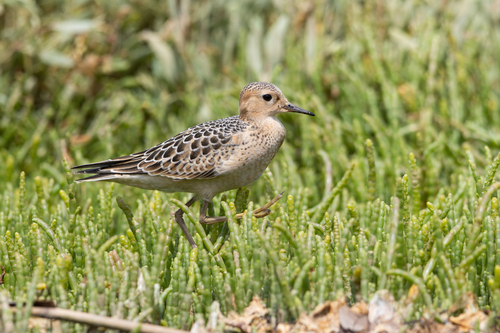 Bécasseau roussâtre
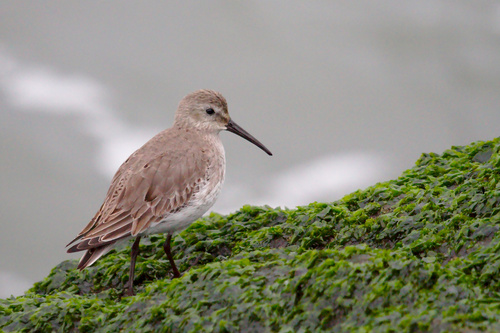 Bécasseau variable
En bref
Le Bécasseau roussâtre et le Bécasseau variable sont tous deux de petits oiseaux de rivage, mais ils peuvent être distingués par leur structure et leur plumage. Le Bécasseau roussâtre a une construction plus délicate avec un bec court et droit, tandis que le Bécasseau variable est plus robuste avec un bec plus long et légèrement courbé. Les différences de plumage sont également notables, surtout pendant la saison de reproduction.
Conseils d’identification
- Bill shape: Le Bécasseau roussâtre a un bec court et droit ; le Bécasseau variable a un bec plus long et légèrement courbé.
- Breeding plumage: Recherchez la tache noire sur le ventre du Bécasseau variable.
- Habitat preference: Le Bécasseau roussâtre se trouve dans des zones sèches et herbeuses ; le Bécasseau variable se trouve dans des zones côtières.
Taille
Le Bécasseau roussâtre est plus délicat et élancé par rapport au Bécasseau variable plus robuste.
Plumage
Le Bécasseau roussâtre a une apparence pâle et rousse avec un manque de marques fortes, tandis que le Bécasseau variable en plumage de reproduction a une tache noire distinctive sur le ventre et un dos roux. En plumage non reproducteur, le Bécasseau variable est gris et plus indéfini.
Habitat
Le Bécasseau roussâtre préfère les habitats secs et herbeux, souvent loin de l'eau, tandis que le Bécasseau variable est étroitement lié aux zones côtières et intertidales.
Bécasseau roussâtre · Bécasseau variable · Mes oiseaux difficiles