

Motmot

Eider à duvet vs Érismature à tête blanche

Somateria mollissima contre Oxyura leucocephala

Faire un quiz avec Eider à duvet et Érismature à tête blanche
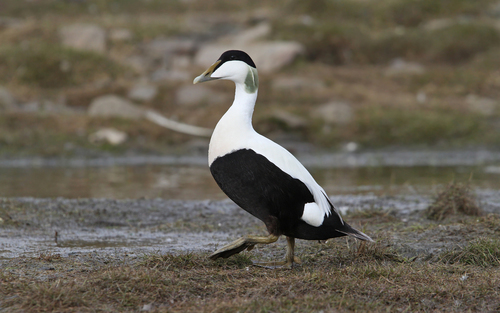
Eider à duvet (Somateria mollissima) Eider à duvet

Érismature à tête blanche (Oxyura leucocephala) Érismature à tête blanche

Médias

Chargement…

En bref

The most reliable field mark to separate Common Eider from White-headed Duck is size and structure: the eider is vastly larger, with a heavy, wedge-shaped bill and a bulky, elongated body, while the White-headed Duck is compact, short-necked, and has a stiff, spiky tail. Adult male plumage is also distinctive—male eiders are black and white with a green nape, while male White-headed Ducks have a white face with a black crown and a bright blue bill. Females and immatures of both species are browner, but eiders remain much larger and bulkier. In flight or on water, the eider’s size and head shape are unmistakable compared to the small, round-headed White-headed Duck.

Conseils d’identification

  1. Size is the quickest check: Common Eider is over three times heavier and much longer than White-headed Duck. If the bird appears goose-sized or larger than any other duck present, it is an eider.
  2. Bill shape is diagnostic: Eider has a long, heavy, wedge-shaped bill with a sloping forehead; White-headed Duck has a short, high, swollen bill (blue in adult males) and a rounded head.
  3. Body structure: Eiders are long-bodied, heavy, and sit low in the water; White-headed Ducks are compact, short-necked, and often cock their stiff tails upright.
  4. Adult male plumage: Male eiders are boldly black-and-white with a green nape; male White-headed Ducks have a white face, black crown, blue bill, and reddish-grey body.
  5. Female/immature plumage: Female eiders are large, warm brown, and heavy-billed; female White-headed Ducks are much smaller, grey-brown, with a white face and dark cheek stripe.
  6. Tail shape: White-headed Ducks of all ages and sexes have a stiff, spiky tail often held upright; eiders have a normal, rounded duck tail.
  7. Flight silhouette: Eiders show long, broad wings and a heavy, elongated body; White-headed Ducks are compact with short wings and a dumpy look.
  8. Habitat context: Eiders are almost always on saltwater coasts or offshore; White-headed Ducks are strictly freshwater, on lakes and marshes.
  9. Group size: Eiders often gather in large flocks; White-headed Ducks are usually seen singly or in small groups.
  10. Behavior when disturbed: Eiders may fly readily; White-headed Ducks prefer to dive or swim away, rarely flying unless forced.
  11. Bill color in males: Only male White-headed Ducks have a bright blue bill; eiders never show this feature.
  12. Face pattern in males: White-headed Duck males have a striking white face with a black cap; eider males have a pale head with green nape, never a black cap.
  13. Voice: Eider males give a loud 'ah-ooo' call; White-headed Duck is generally silent.
  14. Geographic range: Eiders are northern, coastal; White-headed Ducks are southern, inland.
  15. Pitfall: Female eiders and female White-headed Ducks can both look brown and plain, but size, bill shape, and habitat will always separate them.

Taille

Common Eider is one of the largest ducks in the world, averaging over 2 kg in mass (2066.5 g), with a body length of 50–71 cm and a wingspan of 80–110 cm. In contrast, the White-headed Duck is much smaller, weighing about 665 g and measuring only 43–48 cm in length. Even at a distance, the eider’s bulk, long body, and broad wings stand out against the compact, short-bodied, and short-necked White-headed Duck. This size difference is apparent in all plumages and is the single most reliable separation feature.

Plumage

No distinctive juvenile or immature upperwing pattern is described for either species, so separation relies on overall plumage and structure. Adult male Common Eiders are strikingly patterned with bold black-and-white plumage and a green nape, while females are a warm brown but still large and heavy-billed. Male White-headed Ducks have a white face with a black crown and neck, a bright blue bill, and a reddish-grey body. Females are duller, with a grey-brown body, white face, and a dark bill, cap, and cheek stripe. Both sexes of White-headed Duck have a stiff, spiky tail, often held cocked. Female eiders, though brown, are always much larger and have a long, sloping forehead and wedge-shaped bill, never the compact, round-headed look of the White-headed Duck. In eclipse or immature plumages, eiders remain bulkier and longer-necked, while White-headed Ducks retain their small, round-headed, and short-necked appearance.

Comportement

Common Eiders are strong, direct fliers and often seen in large flocks on open coastal waters, diving for molluscs and crustaceans. They tend to be more tolerant of disturbance and are often seen resting on rocks or shorelines. White-headed Ducks are diving ducks as well, but are far more skulking, preferring to swim away from danger rather than fly, and are rarely seen in large groups. They often hold their stiff tails upright and spend much time hidden among dense vegetation at lake margins. Their flight is fast and low, but they are reluctant to take off unless pressed.

Habitat

Common Eider is strictly marine outside the breeding season, found along northern coasts of Europe, North America, and Siberia, rarely venturing inland except for a few exceptional populations. They are associated with open sea, rocky coasts, and offshore islands. White-headed Duck, in contrast, is a freshwater species, breeding on lakes with open water and dense marginal vegetation in Spain, North Africa, and Central/Western Asia. They are never marine and are found only on inland lakes and wetlands. Thus, habitat alone is often a strong clue: eiders on saltwater, White-headed Ducks on freshwater lakes.

Voix

Common Eider males give a distinctive, almost human-like 'ah-ooo' display call, while females utter hoarse quacks. No specific vocalizations are described for White-headed Duck in the sources, but they are generally much quieter and less conspicuous. Calls are unlikely to be a primary separation feature in the field.

Envoyer une meilleure description

Utilise les mêmes sections que la comparaison. Ton texte est publié tout de suite.

The most reliable field mark to separate Common Eider from White-headed Duck is size and structure: the eider is vastly larger, with a heavy, wedge-shaped bill and a bulky, elongated body, while the White-headed Duck is compact, short-necked, and has a stiff, spiky tail. Adult male plumage is also distinctive—male eiders are black and white with a green nape, while male White-headed Ducks have a white face with a black crown and a bright blue bill. Females and immatures of both species are browner, but eiders remain much larger and bulkier. In flight or on water, the eider’s size and head shape are unmistakable compared to the small, round-headed White-headed Duck.

  1. Size is the quickest check: Common Eider is over three times heavier and much longer than White-headed Duck. If the bird appears goose-sized or larger than any other duck present, it is an eider.
  2. Bill shape is diagnostic: Eider has a long, heavy, wedge-shaped bill with a sloping forehead; White-headed Duck has a short, high, swollen bill (blue in adult males) and a rounded head.
  3. Body structure: Eiders are long-bodied, heavy, and sit low in the water; White-headed Ducks are compact, short-necked, and often cock their stiff tails upright.
  4. Adult male plumage: Male eiders are boldly black-and-white with a green nape; male White-headed Ducks have a white face, black crown, blue bill, and reddish-grey body.
  5. Female/immature plumage: Female eiders are large, warm brown, and heavy-billed; female White-headed Ducks are much smaller, grey-brown, with a white face and dark cheek stripe.
  6. Tail shape: White-headed Ducks of all ages and sexes have a stiff, spiky tail often held upright; eiders have a normal, rounded duck tail.
  7. Flight silhouette: Eiders show long, broad wings and a heavy, elongated body; White-headed Ducks are compact with short wings and a dumpy look.
  8. Habitat context: Eiders are almost always on saltwater coasts or offshore; White-headed Ducks are strictly freshwater, on lakes and marshes.
  9. Group size: Eiders often gather in large flocks; White-headed Ducks are usually seen singly or in small groups.
  10. Behavior when disturbed: Eiders may fly readily; White-headed Ducks prefer to dive or swim away, rarely flying unless forced.
  11. Bill color in males: Only male White-headed Ducks have a bright blue bill; eiders never show this feature.
  12. Face pattern in males: White-headed Duck males have a striking white face with a black cap; eider males have a pale head with green nape, never a black cap.
  13. Voice: Eider males give a loud 'ah-ooo' call; White-headed Duck is generally silent.
  14. Geographic range: Eiders are northern, coastal; White-headed Ducks are southern, inland.
  15. Pitfall: Female eiders and female White-headed Ducks can both look brown and plain, but size, bill shape, and habitat will always separate them.

Common Eider is one of the largest ducks in the world, averaging over 2 kg in mass (2066.5 g), with a body length of 50–71 cm and a wingspan of 80–110 cm. In contrast, the White-headed Duck is much smaller, weighing about 665 g and measuring only 43–48 cm in length. Even at a distance, the eider’s bulk, long body, and broad wings stand out against the compact, short-bodied, and short-necked White-headed Duck. This size difference is apparent in all plumages and is the single most reliable separation feature.

No distinctive juvenile or immature upperwing pattern is described for either species, so separation relies on overall plumage and structure. Adult male Common Eiders are strikingly patterned with bold black-and-white plumage and a green nape, while females are a warm brown but still large and heavy-billed. Male White-headed Ducks have a white face with a black crown and neck, a bright blue bill, and a reddish-grey body. Females are duller, with a grey-brown body, white face, and a dark bill, cap, and cheek stripe. Both sexes of White-headed Duck have a stiff, spiky tail, often held cocked. Female eiders, though brown, are always much larger and have a long, sloping forehead and wedge-shaped bill, never the compact, round-headed look of the White-headed Duck. In eclipse or immature plumages, eiders remain bulkier and longer-necked, while White-headed Ducks retain their small, round-headed, and short-necked appearance.

Common Eiders are strong, direct fliers and often seen in large flocks on open coastal waters, diving for molluscs and crustaceans. They tend to be more tolerant of disturbance and are often seen resting on rocks or shorelines. White-headed Ducks are diving ducks as well, but are far more skulking, preferring to swim away from danger rather than fly, and are rarely seen in large groups. They often hold their stiff tails upright and spend much time hidden among dense vegetation at lake margins. Their flight is fast and low, but they are reluctant to take off unless pressed.

Common Eider is strictly marine outside the breeding season, found along northern coasts of Europe, North America, and Siberia, rarely venturing inland except for a few exceptional populations. They are associated with open sea, rocky coasts, and offshore islands. White-headed Duck, in contrast, is a freshwater species, breeding on lakes with open water and dense marginal vegetation in Spain, North Africa, and Central/Western Asia. They are never marine and are found only on inland lakes and wetlands. Thus, habitat alone is often a strong clue: eiders on saltwater, White-headed Ducks on freshwater lakes.

Common Eider males give a distinctive, almost human-like 'ah-ooo' display call, while females utter hoarse quacks. No specific vocalizations are described for White-headed Duck in the sources, but they are generally much quieter and less conspicuous. Calls are unlikely to be a primary separation feature in the field.

Abandonner tes modifications ?

Tu as des modifications non enregistrées. Si tu pars maintenant, elles seront perdues.

Eider à duvet · Érismature à tête blanche · Mes oiseaux difficiles