
Hypolaïs pâle vs Hypolaïs polyglotte
Iduna pallida contre Hippolais polyglotta
Faire un quiz avec Hypolaïs pâle et Hypolaïs polyglotte
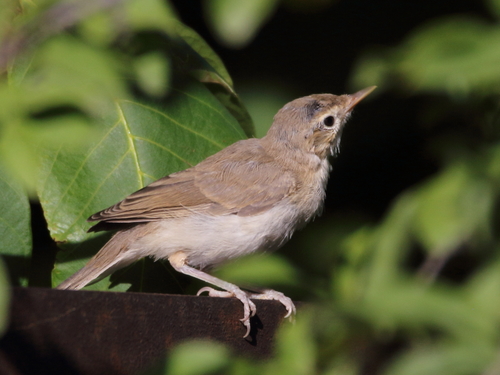 Hypolaïs pâle
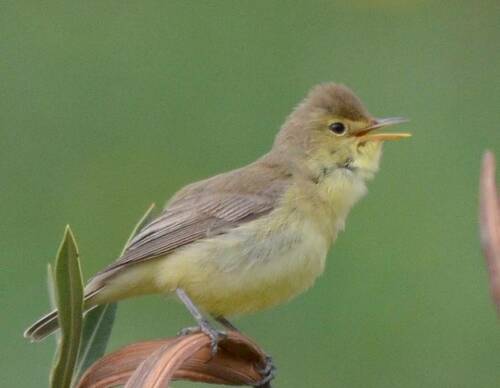 Hypolaïs polyglotte
En bref
La forme et la taille du bec sont essentielles pour distinguer l'Hypolaïs pâle de l'Hypolaïs polyglotte. L'Hypolaïs pâle a un bec plus long et plus fin par rapport au bec plus court et plus épais de l'Hypolaïs polyglotte. De plus, l'Hypolaïs pâle présente généralement un plumage plus terne par rapport aux tons plus vifs de l'Hypolaïs polyglotte.
Conseils d’identification
- Forme du bec : Recherchez un bec plus long et plus fin chez l'Hypolaïs pâle par rapport à un bec plus court et plus épais chez l'Hypolaïs polyglotte.
- Tonalité du plumage : Notez le brun-olive plus terne de l'Hypolaïs pâle par rapport aux tons jaunâtres plus vifs de l'Hypolaïs polyglotte.
Plumage
L'Hypolaïs pâle a tendance à avoir un plumage plus terne et brun-olive, tandis que l'Hypolaïs polyglotte montre souvent des tons jaunâtres plus vifs.
Hypolaïs pâle · Hypolaïs polyglotte · Mes oiseaux difficiles