
Grand Grèbe vs Puffinure de Magellan
Podiceps major contre Pelecanoides magellani
Faire un quiz avec Grand Grèbe et Puffinure de Magellan
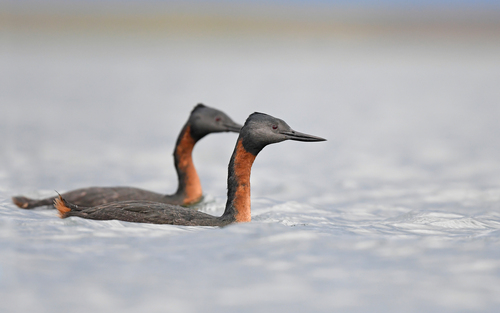 Grand Grèbe
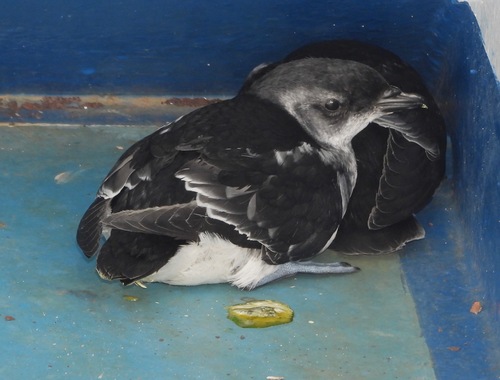 Puffinure de Magellan
En bref
Le Grand Grèbe se distingue par sa grande taille, son long cou fin et son bec en forme de poignard, tandis que la Puffinure de Magellan est beaucoup plus petite avec un corps compact et un plumage noir et blanc contrasté. Le Grand Grèbe se trouve dans une variété d'eaux intérieures et côtières, tandis que la Puffinure de Magellan est principalement observée dans les canaux et fjords du sud du Chili et de l'Argentine.
Conseils d’identification
Vérifiez d'abord la taille et la structure : Le Grand Grèbe est significativement plus grand avec un long cou et un bec en forme de poignard. Observez le plumage : Le Grand Grèbe a un cou roux, tandis que la Puffinure de Magellan montre plus de contraste avec un dessus noir et des marques blanches. Considérez l'habitat : Le Grand Grèbe est polyvalent dans le choix de son habitat, tandis que la Puffinure de Magellan est limitée aux eaux chiliennes et argentines du sud.
Taille
Le Grand Grèbe est le plus grand membre de sa famille, tandis que la Puffinure de Magellan est beaucoup plus petite et plus compacte.
Plumage
Le Grand Grèbe a un cou roux, un dos sombre et un dessous blanchâtre, tandis que la Puffinure de Magellan est plus noire au-dessus avec un demi-collier blanc et des marques blanches plus audacieuses sur les scapulaires et le bord postérieur des ailes.
Habitat
Les Grèbes Grands habitent une large gamme de plans d'eau, y compris des côtes rocheuses, des estuaires marécageux et des rivières et lacs intérieurs. En revanche, la Puffinure de Magellan se trouve dans les canaux et fjords du sud du Chili et de l'Argentine.
Grand Grèbe · Puffinure de Magellan · Mes oiseaux difficiles