
Troglodyte familier vs Paruline de Kirtland
Troglodytes aedon contre Setophaga kirtlandii
Faire un quiz avec Troglodyte familier et Paruline de Kirtland
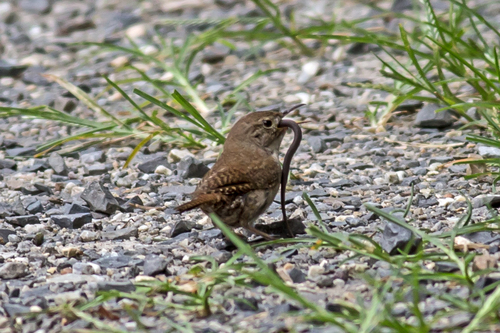 Troglodyte familier
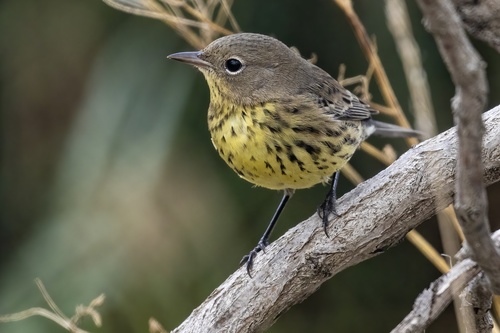 Paruline de Kirtland
En bref
Le Troglodyte familier et la Paruline de Kirtland sont distincts par leur structure et leur préférence d'habitat. Le troglodyte est un petit oiseau compact avec une courte queue et un bec fin, légèrement courbé, tandis que la paruline est plus grande avec une queue plus longue et un bec robuste, droit. Ces espèces sont peu susceptibles d'être confondues sur le terrain en raison de leurs habitats et comportements différents.
Conseils d’identification
Structure: Recherchez la courte queue du troglodyte et son bec fin, légèrement courbé, par rapport à la queue plus longue et au bec robuste, droit de la paruline. Plumage: Notez la coloration brune uniforme du troglodyte par rapport au jaune et au gris de la paruline. Habitat: Considérez l'environnement ; les troglodytes sont plus adaptables à divers habitats, tandis que les parulines sont spécifiques aux forêts de jeunes pins jack.
Taille
Le Troglodyte familier est plus petit et plus compact que la Paruline de Kirtland.
Plumage
Le Troglodyte familier a un plumage brun uniforme, tandis que la Paruline de Kirtland a un ventre jaune distinctif et un dessus gris.
Habitat
Le Troglodyte familier se trouve généralement dans une variété d'habitats ouverts et semi-ouverts, souvent près des habitations humaines. La Paruline de Kirtland préfère les jeunes forêts de pins jack.
Troglodyte familier · Paruline de Kirtland · Mes oiseaux difficiles