
Canard souchet vs Tantale indien
Spatula clypeata contre Mycteria leucocephala
Faire un quiz avec Canard souchet et Tantale indien
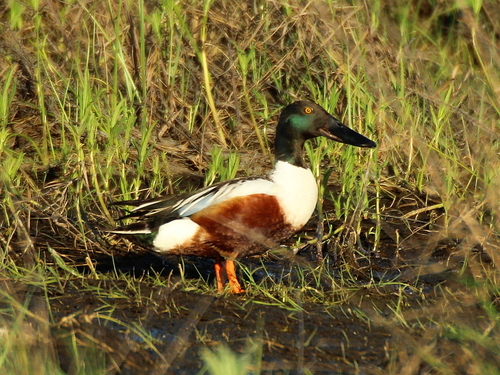 Canard souchet
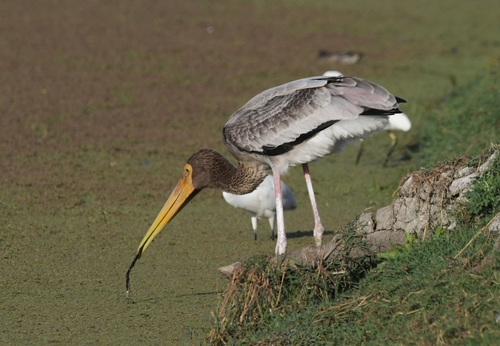 Tantale indien
En bref
Le marque de terrain le plus fiable pour différencier un Canard souchet d'un Tantale indien est la forme du bec : le Canard souchet a un bec distinctif, large et en forme de spatule, tandis que le Tantale indien a un long bec légèrement courbé. Ces espèces ne sont pas étroitement liées, ce qui rend leurs différences structurelles plus prononcées.
Conseils d’identification
- Forme du bec : le Canard souchet a un bec large en forme de spatule ; le Tantale indien a un long bec légèrement courbé.
- Taille : le Tantale indien est beaucoup plus grand que le Canard souchet.
- Plumage : recherchez la tête verte chez les mâles Canards souchets et le plumage rose et blanc des Tantales indiens.
Taille
Le Tantale indien est significativement plus grand que le Canard souchet.
Plumage
Le Canard souchet a un plumage plus uniforme avec une tête verte chez les mâles, tandis que le Tantale indien a un plumage frappant rose et blanc avec des plumes de vol noires.