
Pipromorphe roussâtre vs Bec-en-arc cendré
Mionectes oleagineus contre Oncostoma cinereigulare
Faire un quiz avec Pipromorphe roussâtre et Bec-en-arc cendré
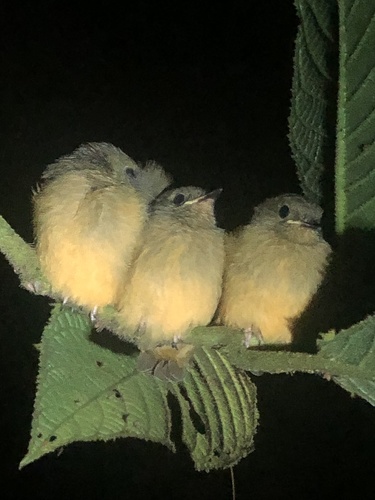 Pipromorphe roussâtre
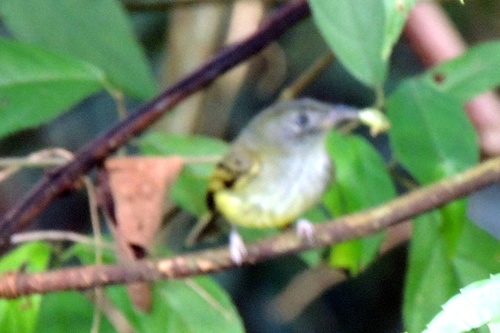 Bec-en-arc cendré
En bref
La manière la plus fiable de distinguer le Pipromorphe roussâtre du Bec-en-arc cendré est d'observer la forme du bec : le Bec-en-arc cendré a un bec distinctif, court, large et courbé vers le bas, contrairement au bec plus typique de l'attrape-mouches du Pipromorphe roussâtre. De plus, le Bec-en-arc cendré a un iris pâle, ce qui peut être une caractéristique utile à noter.
Conseils d’identification
1. Forme du bec : Recherchez le bec court, large et courbé vers le bas du Bec-en-arc cendré. 2. Couleur des yeux : Notez l'iris pâle du Bec-en-arc cendré. 3. Écoutez les appels : Le Bec-en-arc cendré a un appel dur, semblable à celui d'une grenouille, ce qui peut aider à l'identification.
Pipromorphe roussâtre · Bec-en-arc cendré · Mes oiseaux difficiles