
Goéland ichthyaète vs Étourneau unicolore
Ichthyaetus ichthyaetus contre Sturnus unicolor
Faire un quiz avec Goéland ichthyaète et Étourneau unicolore
 Goéland ichthyaète
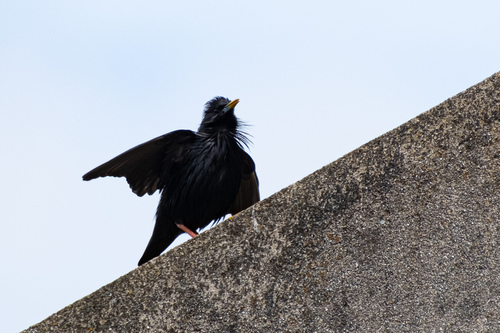 Étourneau unicolore
En bref
Le Goéland ichthyaète et l'Étourneau unicolore se distinguent facilement par leur taille et leur habitat. Le Goéland ichthyaète est un grand oiseau marin, tandis que l'Étourneau unicolore est un oiseau chanteur terrestre beaucoup plus petit. Observer leur environnement et leur taille permettra rapidement de séparer ces deux espèces.
Conseils d’identification
Vérifiez d'abord la taille et l'habitat : le Goéland ichthyaète est beaucoup plus grand et se trouve près de l'eau, tandis que l'Étourneau unicolore est plus petit et se trouve dans des habitats terrestres. Recherchez le plumage distinctif noir et blanc du goéland par rapport au plumage sombre uniforme de l'étourneau.
Taille
Le Goéland ichthyaète est significativement plus grand que l'Étourneau unicolore, avec une envergure qui peut être plus de deux fois la longueur de l'étourneau.
Plumage
Le Goéland ichthyaète a un corps principalement blanc avec des marques noires sur la tête et les ailes, tandis que l'Étourneau unicolore est uniformément sombre avec un éclat brillant.
Habitat
Le Goéland ichthyaète se trouve généralement près de grandes étendues d'eau, telles que les mers et les grands lacs, tandis que l'Étourneau unicolore est plus souvent vu dans des environnements terrestres, y compris les zones urbaines et la campagne ouverte.
Goéland ichthyaète · Étourneau unicolore · Mes oiseaux difficiles