
Phénopèple luisant vs Paruline vermivore
Phainopepla nitens contre Helmitheros vermivorum
Faire un quiz avec Phénopèple luisant et Paruline vermivore
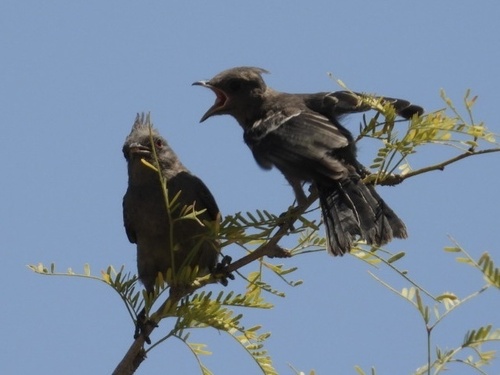 Phénopèple luisant
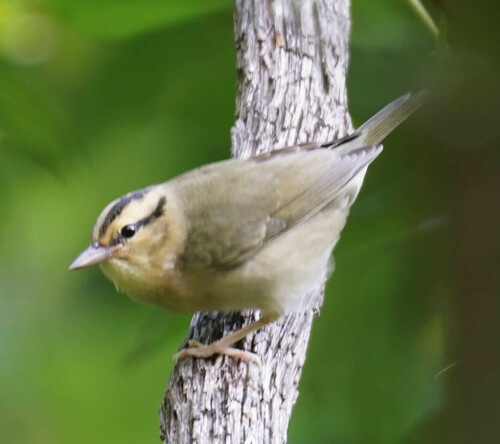 Paruline vermivore
En bref
Le Phénopèple luisant et la Paruline vermivore sont distincts tant par leur apparence que par leur comportement. Le Phénopèple luisant se distingue par son plumage noir brillant et ses taches blanches aux ailes chez les mâles, tandis que la Paruline vermivore a une coloration plus sobre sans tels contrastes. Observer leur comportement et leur habitat peut également aider à distinguer ces espèces.
Conseils d’identification
Recherchez le plumage noir brillant du Phénopèple luisant et les taches blanches aux ailes chez les mâles en vol. Observez le comportement : les Phénopèples luisants battent souvent des ailes et zigzaguent, contrairement aux Parulines vermivores.
Plumage
Le mâle Phénopèple luisant est noir brillant avec des taches blanches frappantes aux ailes visibles en vol, tandis que la Paruline vermivore ne présente pas de tels contrastes, affichant des tons plus atténués.
Comportement
Les Phénopèples luisants sont connus pour leur vol battant et zigzaguant, surtout lorsqu'ils poursuivent des insectes volants. Ce comportement n'est pas typique de la Paruline vermivore.
Habitat
Les Phénopèples luisants se reproduisent dans des régions désertiques et se déplacent ensuite vers des canyons de chênes et de sycomores, tandis que les préférences d'habitat de la Paruline vermivore ne sont pas détaillées ici.
Phénopèple luisant · Paruline vermivore · Mes oiseaux difficiles