
Arachnothère strié vs Petit Arachnothère
Kurochkinegramma hypogrammicum contre Arachnothera longirostra
Faire un quiz avec Arachnothère strié et Petit Arachnothère
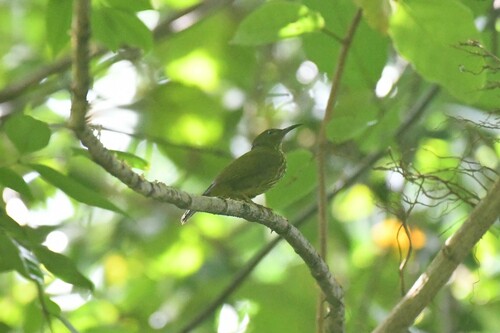 Arachnothère strié
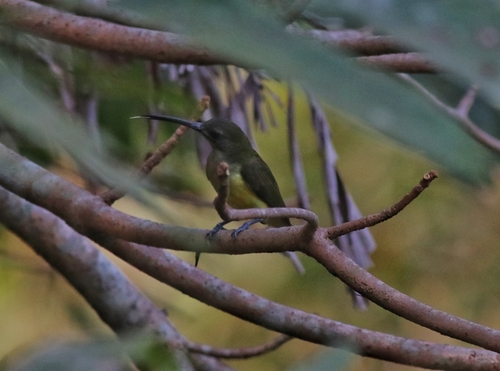 Petit Arachnothère
En bref
L'Arachnothère strié et le Petit Arachnothère peuvent être distingués principalement par la forme et la taille de leur bec. L'Arachnothère strié a un bec plus robuste et légèrement courbé, tandis que le Petit Arachnothère présente un bec plus long et plus élancé. Observer ces différences dans la structure du bec est essentiel pour l'identification.
Conseils d’identification
- Forme du bec : Recherchez le bec plus robuste et légèrement courbé de l'Arachnothère strié par rapport au bec plus long et élancé du Petit Arachnothère. 2. Contexte d'observation : Utilisez des jumelles pour vous concentrer sur la structure du bec, car c'est le marqueur de terrain le plus fiable pour distinguer ces espèces.
Arachnothère strié · Petit Arachnothère · Mes oiseaux difficiles