
Cormoran africain vs Cormoran de Socotra
Microcarbo africanus contre Phalacrocorax nigrogularis
Faire un quiz avec Cormoran africain et Cormoran de Socotra
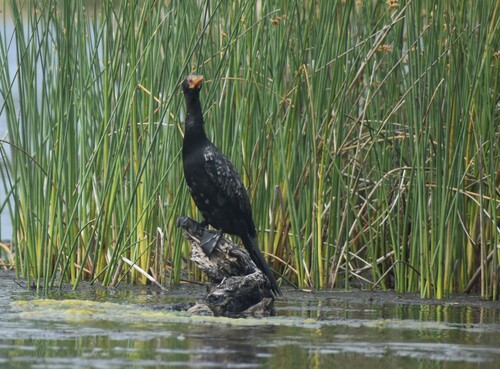 Cormoran africain
 Cormoran de Socotra
En bref
Le marqueur de terrain le plus fiable pour séparer le Cormoran africain du Cormoran de Socotra est la taille et la structure globales : le Cormoran africain est un oiseau notablement plus petit et plus délicat avec une queue proportionnellement plus longue et un bec jaune, tandis que le Cormoran de Socotra est plus grand, plus lourd et n'a pas la longue queue ni le bec jaune. Les Cormorans africains adultes en plumage nuptial montrent un éclat verdâtre et des couvertures alaires argentées, parfois avec une crête, tandis que le Cormoran de Socotra est uniformément sombre. Les juvéniles et les oiseaux non reproducteurs du Cormoran africain sont plus bruns avec un ventre blanc, contrairement au Cormoran de Socotra qui est constamment sombre. L'habitat est également un indice fort : le Cormoran africain se trouve dans les zones humides d'eau douce africaines, tandis que le Cormoran de Socotra est limité aux côtes du Golfe Persique et de la péninsule arabique.
Conseils d’identification
- Taille et Structure : Le Cormoran africain est beaucoup plus petit et plus mince que le Cormoran de Socotra. Recherchez une queue proportionnellement longue et une construction délicate chez le Cormoran africain ; le Cormoran de Socotra est plus massif et n'a pas la longue queue.
- Couleur du Bec : Le Cormoran africain a un bec jaune, souvent évident de près ou par bonne lumière. Le bec du Cormoran de Socotra ne montre pas cette coloration jaune.
- Tache Faciale : Chez le Cormoran africain, une tache faciale rouge ou jaune est présente, surtout chez les adultes en période de reproduction. Le Cormoran de Socotra n'a pas cette caractéristique.
- Crête : Certains Cormorans africains (surtout les races du sud) montrent une courte crête sur la tête toute l'année, plus évidente en saison de reproduction. Le Cormoran de Socotra n'a pas de crête.
- Éclat du Plumage et Couvertures Ailaires : Les Cormorans africains en reproduction sont noirs avec un éclat verdâtre et des couvertures alaires argentées. Le Cormoran de Socotra est uniformément sombre sans couvertures argentées ni éclat vert.
- Plumage Juvénile/Non-reproducteur : Les Cormorans africains juvéniles et non reproducteurs sont plus bruns au-dessus avec un ventre blanc distinct, un fort contraste avec le Cormoran de Socotra qui est entièrement sombre à tout âge.
- Longueur de la Queue : La queue du Cormoran africain est nettement plus longue en proportion de son corps que chez le Cormoran de Socotra. Cela est souvent visible à la fois en perchoir et en vol.
- Habitat : Le Cormoran africain se trouve dans les zones humides d'eau douce intérieures et les lacs ; le Cormoran de Socotra est strictement côtier dans la région arabe. Si vous n'êtes pas sur le Golfe Persique ou la côte sud-est de l'Arabie, le Cormoran de Socotra est extrêmement peu probable.
- Répartition Géographique : Le Cormoran africain est répandu en Afrique subsaharienne et à Madagascar ; le Cormoran de Socotra est endémique au Golfe Persique et aux côtes voisines.
- Taille du Groupe : Le Cormoran de Socotra peut se trouver en grands groupes côtiers, tandis que le Cormoran africain est généralement vu en plus petits groupes ou seul dans les eaux intérieures.
- Posture en Perchoir : Le Cormoran africain se perche souvent bas sur des roseaux ou des branches, parfois avec les ailes déployées pour sécher. Le Cormoran de Socotra est plus susceptible d'être vu sur des côtes rocheuses ou des îles au large.
- Silhouette en Vol : La longue queue du Cormoran africain et son corps plus petit lui donnent une apparence plus allongée et plus légère en vol par rapport au Cormoran de Socotra, plus lourd et à la queue plus courte.
- Couvertures Ailaires Argentées : Vérifiez la présence de couvertures alaires argentées chez le Cormoran africain adulte (reproduction), absentes chez le Cormoran de Socotra.
- Ventre Blanc en Vol : Le Cormoran africain juvénile peut montrer un ventre blanc en vol, une caractéristique jamais vue chez le Cormoran de Socotra.
- Mouvements Saisonniers : Le Cormoran africain est principalement résident mais peut se déplacer localement ; le Cormoran de Socotra est plus sédentaire et côtier, avec seulement de rares errances vers la mer Rouge.
Taille
Le Cormoran africain est un petit cormoran, mesurant 50–55 cm de long avec une envergure de 80–90 cm. Le Cormoran de Socotra est plus grand et plus lourd, bien que des mesures exactes ne soient pas fournies ici ; son impression générale est plus massive et plus robuste. Sur le terrain, le Cormoran africain apparaît mince et à longue queue, tandis que le Cormoran de Socotra est plus solide et moins allongé dans la queue.
Plumage
Les Cormorans africains juvéniles et non reproducteurs sont brunâtres au-dessus avec un ventre blanc contrastant, une caractéristique non observée chez le Cormoran de Socotra à tout âge. Les Cormorans africains adultes en plumage nuptial sont noirs brillants avec un éclat verdâtre et des couvertures alaires argentées, et peuvent montrer une courte crête (parfois conservée toute l'année chez les races du sud). Le Cormoran de Socotra, en revanche, est uniformément sombre sans ventre pâle ni couvertures alaires argentées à tout âge ou saison. La tache faciale du Cormoran africain est rouge ou jaune et le bec est jaune, tandis que le Cormoran de Socotra ne montre pas ces caractéristiques. Ces différences de plumage sont les plus évidentes lorsque les oiseaux sont perchés ou de près, mais le ventre blanc du Cormoran africain juvénile peut également être visible en vol.
Comportement
Le Cormoran africain se nourrit souvent dans des eaux douces peu profondes, apportant fréquemment des proies à la surface et est couramment vu perché sur des roseaux ou des branches basses. Le Cormoran de Socotra est une espèce côtière, plus marine dans ses habitudes, et ne se trouve pas à l'intérieur des terres. Les deux espèces plongent pour attraper des poissons, mais leurs habitats de recherche ne se chevauchent pas. Le Cormoran africain est plus susceptible d'être vu seul ou en petits groupes dans les eaux intérieures, tandis que le Cormoran de Socotra peut former de plus grands groupes côtiers.
Habitat
L'habitat est un séparateur fort : le Cormoran africain est répandu et commun dans les zones humides d'eau douce, les lacs et les côtes calmes à travers l'Afrique subsaharienne et Madagascar. Le Cormoran de Socotra est limité aux côtes du Golfe Persique et de la péninsule arabique sud-est, s'éloignant rarement vers la mer Rouge. Si vous êtes loin de la côte arabe ou du Golfe Persique, le Cormoran de Socotra est très peu probable. Le Cormoran africain évite les côtes marines dans la plupart de son aire de répartition.
Cormoran africain · Cormoran de Socotra · Mes oiseaux difficiles