
Troglodyte à bec court vs Troglodyte de Caroline
Cistothorus stellaris contre Thryothorus ludovicianus
Faire un quiz avec Troglodyte à bec court et Troglodyte de Caroline
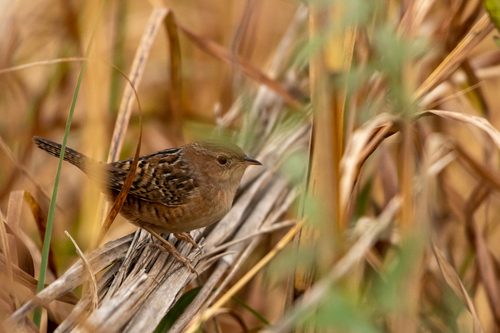 Troglodyte à bec court
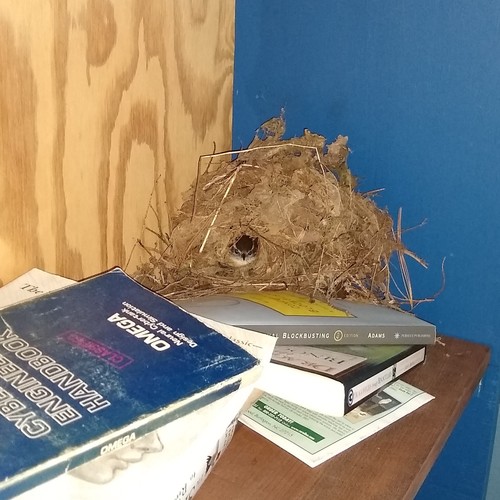 Troglodyte de Caroline
En bref
Le Troglodyte à bec court et le Troglodyte de Caroline peuvent être distingués par leurs préférences d'habitat et leurs vocalisations. Le Troglodyte à bec court se trouve généralement dans des zones humides et herbeuses, tandis que le Troglodyte de Caroline est plus souvent observé dans des environnements boisés ou suburbains. Leurs chants diffèrent également de manière significative, facilitant l'identification.
Conseils d’identification
Cherchez le Troglodyte à bec court dans des habitats humides et herbeux et écoutez son chant distinct. Le Troglodyte de Caroline est plus susceptible d'être trouvé dans des zones boisées ou suburbaines, grimpant souvent et fouillant sur les troncs et les branches.
Taille
Le Troglodyte de Caroline est généralement plus grand que le Troglodyte à bec court, les mâles ayant des becs, des ailes et des pattes plus longs.
Comportement
Les Troglodytes de Caroline sont connus pour leur comportement territorial toute l'année et fouillent souvent sur ou près du sol, grimpant parfois sur les troncs et les branches. Les Troglodytes à bec court sont plus nomades et leur présence peut varier en fonction des conditions d'habitat.
Habitat
Les Troglodytes à bec court préfèrent les zones humides et herbeuses qui sont susceptibles de sécher ou d'être inondées, tandis que les Troglodytes de Caroline se trouvent dans des zones boisées et des environnements suburbains, nichant souvent dans des cavités ouvertes ou des recoins autour des maisons.
Voix
Les chants du Troglodyte à bec court et du Troglodyte de Caroline sont remarquablement différents, chaque espèce ayant des vocalisations distinctes.
Troglodyte à bec court · Troglodyte de Caroline · Mes oiseaux difficiles