
Rossignol calliope vs Gobemouche à croupion jaune
Calliope calliope contre Ficedula zanthopygia
Faire un quiz avec Rossignol calliope et Gobemouche à croupion jaune
 Rossignol calliope
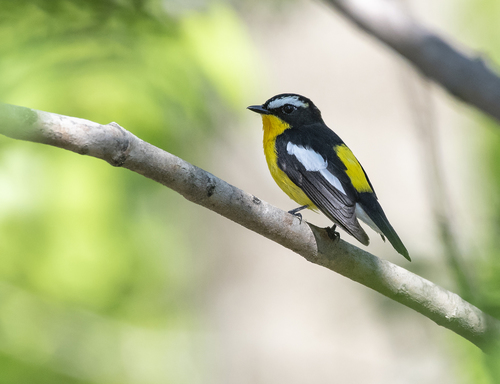 Gobemouche à croupion jaune
En bref
Le Rossignol calliope et le Gobemouche à croupion jaune peuvent être distingués par leur plumage : le Rossignol a une tache de gorge rouge frappante, tandis que le Gobemouche présente un croupion et des parties inférieures jaunes proéminents. Les deux espèces diffèrent considérablement dans leur comportement et leurs préférences d'habitat.
Conseils d’identification
Recherchez la tache de gorge rouge sur le Rossignol calliope, surtout lorsqu'il se trouve dans une végétation dense. Pour le Gobemouche à croupion jaune, concentrez-vous sur le croupion et les parties inférieures jaunes et sa présence dans des habitats plus ouverts.
Plumage
Le Rossignol calliope est connu pour sa tache de gorge rouge vif, contrastant avec son plumage autrement brunâtre. En revanche, le Gobemouche à croupion jaune affiche un croupion et des parties inférieures jaunes brillants, avec un corps supérieur noir et blanc. Ces différences de couleur sont les identifiants les plus fiables.
Comportement
Le Rossignol calliope est plus susceptible d'être vu se faufiler dans une végétation dense, tandis que le Gobemouche à croupion jaune est souvent observé en train de chasser activement dans des zones plus ouvertes.
Habitat
Les Rossignols calliope préfèrent les habitats denses et buissonneux, souvent près du sol, tandis que les Gobemouches à croupion jaune se trouvent généralement dans des forêts ouvertes et en bordure de forêt.
Rossignol calliope · Gobemouche à croupion jaune · Mes oiseaux difficiles