Birdr

Grimpar tacheté vs Grimpar talapiot

Xiphorhynchus erythropygius contre Dendroplex picus

Faire un quiz avec Grimpar tacheté et Grimpar talapiot
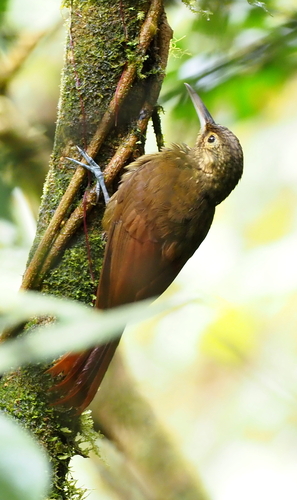
Grimpar tacheté (Xiphorhynchus erythropygius) Grimpar tacheté
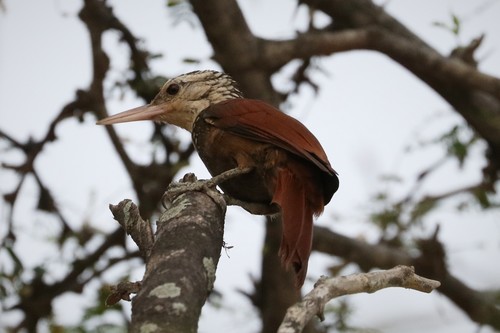
Grimpar talapiot (Dendroplex picus) Grimpar talapiot

Médias

Chargement…

En bref

Le Grimpar tacheté et le Grimpar talapiot peuvent être distingués par leurs becs et leurs vocalisations. Le Grimpar tacheté a un bec gris ardoise légèrement courbé, tandis que le Grimpar talapiot présente un bec droit. La série descendante de notes résonnantes du Grimpar tacheté est un indice auditif clé.

Conseils d’identification

1. Forme du bec : Recherchez le bec gris ardoise légèrement courbé du Grimpar tacheté par rapport au bec droit du Grimpar talapiot. 2. Vocalisation : Écoutez la série descendante de notes résonnantes du Grimpar tacheté. 3. Plumage : Notez les taches fauves et les lunettes fauves pâles sur le Grimpar tacheté, en particulier dans les populations du nord.

Plumage

Le Grimpar tacheté est olive en haut et en bas avec des lunettes fauves pâles et des taches fauves sur la tête, la poitrine et le dos, bien que les populations du sud manquent de taches sur le dos. Les détails du plumage du Grimpar talapiot ne sont pas spécifiés ici, mais concentrez-vous sur la forme du bec pour l'identification.

Voix

Le Grimpar tacheté est souvent détecté par sa série descendante distinctive de notes résonnantes, qui contraste avec les vocalisations du Grimpar talapiot non détaillées ici.

Envoyer une meilleure description

Utilise les mêmes sections que la comparaison. Ton texte est publié tout de suite.

The Spotted Woodcreeper and Straight-billed Woodcreeper can be distinguished by their bills and vocalizations. The Spotted Woodcreeper has a slightly decurved slate gray bill, while the Straight-billed Woodcreeper features a straight bill. The Spotted Woodcreeper's descending series of ringing notes is a key auditory clue.

1. Bill Shape: Look for the Spotted Woodcreeper's slightly decurved slate gray bill versus the Straight-billed Woodcreeper's straight bill. 2. Vocalization: Listen for the Spotted Woodcreeper's descending series of ringing notes. 3. Plumage: Note the buffy spots and pale buff spectacles on the Spotted Woodcreeper, especially in northern populations.

The Spotted Woodcreeper is olive above and below with pale buff spectacles and buffy spots on the head, breast, and back, though southern populations lack back spotting. The Straight-billed Woodcreeper's plumage details are not specified here, but focus on the bill shape for identification.

The Spotted Woodcreeper is often detected by its distinctive descending series of ringing notes, which contrasts with any vocalizations of the Straight-billed Woodcreeper not detailed here.

Abandonner tes modifications ?

Tu as des modifications non enregistrées. Si tu pars maintenant, elles seront perdues.

Grimpar tacheté · Grimpar talapiot · Mes oiseaux difficiles