
Myrmidon à flancs blancs vs Myrmidon ardoisé
Myrmotherula axillaris contre Myrmotherula schisticolor
Faire un quiz avec Myrmidon à flancs blancs et Myrmidon ardoisé
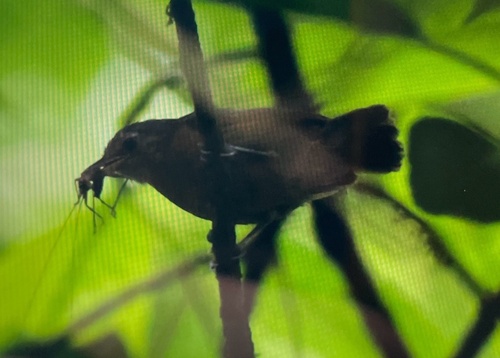 Myrmidon à flancs blancs
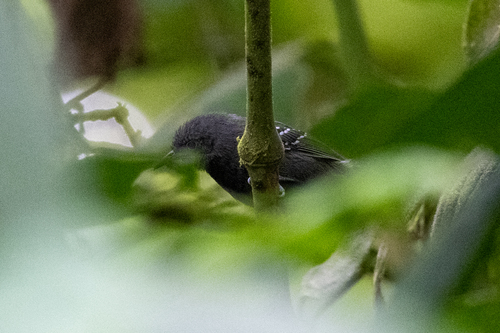 Myrmidon ardoisé
En bref
Le Myrmidon à flancs blancs et le Myrmidon ardoisé peuvent être distingués par leurs préférences d'habitat et les détails de leur plumage. Le Myrmidon à flancs blancs agite souvent ses ailes pour révéler des taches blanches flanquantes conspicues, tandis que le Myrmidon ardoisé est globalement plus sombre avec des taches blanches sur les ailes plus petites. Le Myrmidon ardoisé se trouve dans les forêts de montagne et de contreforts, contrastant avec l'habitat forestier de plaine du Myrmidon à flancs blancs.
Conseils d’identification
- Recherchez le comportement d'agitation des ailes du Myrmidon à flancs blancs révélant des flancs blancs. 2. Notez l'habitat : forêts de plaine pour le Myrmidon à flancs blancs, forêts de montagne et de contreforts pour le Myrmidon ardoisé. 3. Observez le plumage globalement plus sombre et les plus petites taches sur les ailes chez les mâles Myrmidon ardoisé.
Plumage
Les mâles Myrmidon à flancs blancs ont des taches blanches flanquantes conspicues, qui sont révélées par leur comportement d'agitation des ailes. Les mâles Myrmidon ardoisé sont plus sombres dans l'ensemble avec des taches blanches sur les ailes plus petites. Les femelles Myrmidon ardoisé sont plus brillantes et plus cannelle en dessous.
Comportement
Les Myrmidon à flancs blancs sont connus pour leur habitude d'agiter nerveusement leurs ailes pour révéler leurs flancs blancs.
Habitat
Les Myrmidon à flancs blancs se trouvent dans le sous-bois des forêts de plaine du Honduras à la Bolivie et dans l'est côtier du Brésil. Les Myrmidon ardoisé se trouvent dans les forêts de montagne et de contreforts entre 600 et 2400 mètres.
Myrmidon à flancs blancs · Myrmidon ardoisé · Mes oiseaux difficiles