
Tangara hirundinacé vs Sicale bouton-d'or
Cypsnagra hirundinacea contre Sicalis flaveola
Faire un quiz avec Tangara hirundinacé et Sicale bouton-d'or
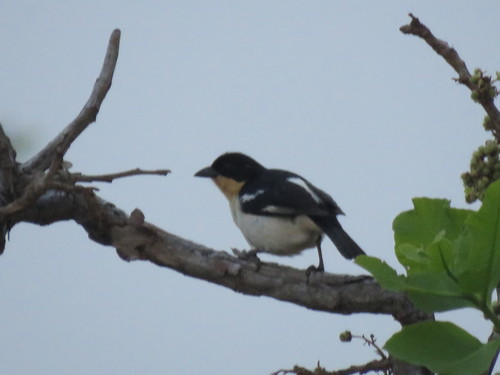 Tangara hirundinacé
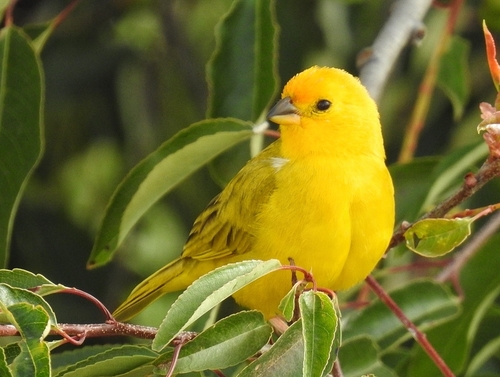 Sicale bouton-d'or
En bref
Le Tangara hirundinacé se distingue par son plumage noir avec un croupion blanc frappant, tandis que la Sicale bouton-d'or est principalement jaune. Ces deux espèces sont peu susceptibles d'être confondues en raison de leur coloration distincte et de leurs habitats différents.
Conseils d’identification
Recherchez le croupion blanc sur le Tangara hirundinacé, qui est une caractéristique clé de distinction. La coloration jaune globale de la Sicale bouton-d'or est un identifiant clair. Observer le comportement en groupe et l'habitat peut également aider à l'identification.
Plumage
Les Tangaras hirundinacés ont un plumage noir avec un croupion blanc et des parties inférieures qui varient du cannelle au blanc. En revanche, les Sicales bouton-d'or sont principalement jaunes, ce qui les rend facilement distinguables du tangara.
Comportement
Les Tangaras hirundinacés se trouvent souvent en groupes de 3 à 6 et participent à des duos complexes, tandis que les Sicales bouton-d'or n'exhibent pas ces comportements spécifiques.
Habitat
Les Tangaras hirundinacés se trouvent généralement dans des groupes d'espèces mixtes dans le sous-bois, tandis que les Sicales bouton-d'or sont plus communément associées à des zones ouvertes et semi-ouvertes.
Voix
Les Tangaras hirundinacés sont connus pour leurs duos complexes, souvent émis tôt le matin. Aucune information spécifique sur la vocalisation n'est fournie pour la Sicale bouton-d'or dans ce contexte.
Tangara hirundinacé · Sicale bouton-d'or · Mes oiseaux difficiles